
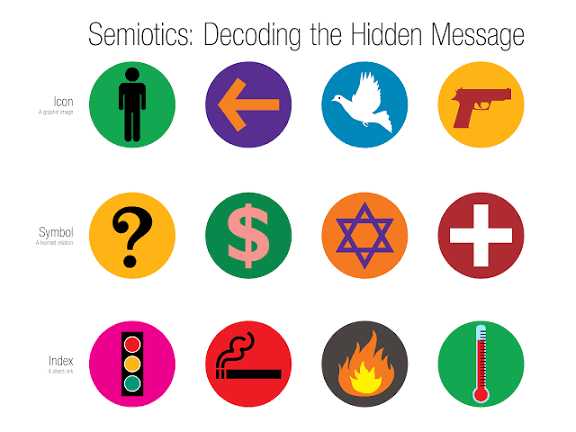
Everyday signs, words, sounds, images, and symbols are all around us and subtly influence how we perceive the world. These indicators, which include national flags, TV series, and magazine covers, convey more than just basic information. They trigger strong feelings, convey layers of cultural significance, and even affect our comprehension of social and political concerns. The study of signs and meaning-making, or semiotics, enables us to understand how and why these meanings are important.
one of the most influential ideas in this field is the concept of encoding and decoding, a framework that explains how media messages are created, shared and interpreted. It reminds us that meaning is never fixed and open to everyone’s individual interpretation. A message that seems clear to one person can be understood very differently by another. So let’s explore how this works and why its so important in this day and age.
How Signs Create Meaning
Before we dive into encoding and decoding, it’s good to understand what a sign actually is. Early thinkers in linguistics, such as Ferdinand de Saussure, described signs as having two parts:
- the signifier (a sound, word, image, expression)
- the signified (the concept or meaning attached to it)
It’s important to understand the link between signifier and signified is arbitrary. A white dress can signify purity and innocence in one culture and mourning in another. A national flag might spark pride in some viewers and alienation in others. The flexibility of interpretation allows signs to take on so much power in the media, being able to target their desired audiences.
This concept was developed by contemporary semioticians like Roland Barthes, who demonstrated how signs may create myths, wide cultural narratives that appear “natural” but are actually manufactured. Ideas about gender, race, or national identity, for instance, might be reinforced by the employment of a specific image or type of clothing without ever explicitly articulating them.
Encoding: How Media Messages Are Constructed
Every media message begins with encoding. This process is which producers create content, whether its Tv show, news story, advert, or photograph. By using symbols they expect the audience to recognise and interpret.
Producers pull on shared cultural knowlege. They select:
- verbal signs, such as dialogues, headlines or slogans
- non verbal signs, such as colour, facial expressions, clothing or music.
Encoding is very much intentional, Creators imagine how their audiences see the world and create messages in ways they believe will make sense to viewers. A dramatic image may be encoded to elicit pity or indignation, while a humorous scenario is encoded to make people laugh. But once the message is in the world, its meaning is no longer fixed.
Decoding: How Audiences Interpret Media
Decoding is the process of interpreting a message. Importantly, viewers actively interpret what they see rather than passively absorbing meanings. Their interpretations are influenced by social status, cultural background, personal experience, and beliefs.
Decoding tends to fall into three categories:
- Dominant Reading- The audience interprets the message exactly as intended by the producer. For example, a comedy show aims to make viewers laugh, and viewers respond with laughter.
- Negotiated Reading- The audience only interprets the intended media partially, but modifies it based on their own views. They may enjoy the humour of a show yet feel uneasy about certain jokes.
- Oppositional Reading- The audience understands the indexed meaning but rejects it entirely. This often occurs when the content clashes with deeply held views. For example, when viewers respond critically to stereotypes or discriminatory portrayals in media.
These three views showcase that meaning is never one- directional.
Signs, Power and Social Struggle
When we look at how signs relate to themes like race and identity, semiotics becomes especially effective. Over time, the meaning of some signs like the term “Black” has drastically evolved, moving from racist stereotypes to symbols of empowerment and solidarity. This demonstrates that signification is a place of conflict, where several groups argue about who should interpret a sign and how it should be understood.
The media is a major factor in this conflict. Myths about race, gender, class, and nationality can either be challenged or reinforced. Knowing how signs are encoded and decoded enables us to identify when they are being reclaimed to encourage change and when they are being used to reinforce bias.
Why Encoding and Decoding Matter Today
Understanding encoding and decoding is more than simply an academic exercise in a time when images, videos, memes, and messages abound. It’s a useful tool for interacting with contemporary media.
It helps us:
- create our own messages more thoughtfully
- question how media shapes ideas about culture and politics
- recognise when signs are being used to reinforce sterotypes
- Appreciate the power of media to influence the society we live in.
Semiotics teaches us that meaning is rarely neutral. By learning to decode the world more carefully, and encode our own ideas more responsibly. We become more active, critical participants bin culture rather than passive consumers.
References
Barthes, R. (1957) Mythologies. Paris: Seuil.
Chandler, D. (2022) Semiotics: The Basics. 4th edn. London: Routledge.
Hall, S. (1973) Encoding and Decoding in the Television Discourse. Birmingham: Centre for Contemporary Cultural Studies.
Hall, S. (2019) Essential Essays, Vols 1 & 2. Edited by D. Morley. Durham: Duke University Press.
Hall, S. (2021) Writings on Media. Edited by C. Brunsdon. Durham: Duke University Press.
Strinati, D. (2004) An Introduction to Theories of Popular Culture. London: Routledge.
Bennett, P. and McDougall, J. (eds.) (2015) Barthes’ Mythologies Today: Readings of Contemporary Culture. London: Routledge.


I really enjoyed reading your post because you explained encoding and decoding in a really clear way that makes the theory feel relevant to how we actually interact with media every day. I liked the examples about how signs can mean totally different things depending on culture or personal experience, because it shows so well why people often react so differently to the same image or message online. Your explanation of dominant, negotiated and oppositional readings was also easy to follow and it made me think about how often I probably interpret things in a negotiated way without realising it. The part about signs becoming a place of struggle, especially around race and identity, stood out to me because it shows how meaning isn’t just academic but something people actually fight over in real life.
I really appreciate your breakdown of specific symbols that help us encode and decode messages, and how our interpretations can vary based on personal experience. I think the conversation around semiotics was very thorough and understandable, and you did a great job connecting these theories to real-life struggles. Your post made me wonder about what other areas in life exist where assigned meanings impact our interpretations more than the simple words or symbols, and where else taking a dominant reading of a message actually gives a less full understanding of the situation.
This text clearly explains semiotics and the encoding-decoding framework, showing how everyday signs shape how we see the world. It uses Saussure and Barthes’ ideas, plus relatable examples, to highlight that the link between signs and their meanings isn’t fixed. It also points out that audiences don’t just accept media messages—they interpret them in three different ways based on their backgrounds. By connecting semiotics to issues like race and identity, the text proves it’s not just an academic concept but a handy tool to think critically about media and culture.