
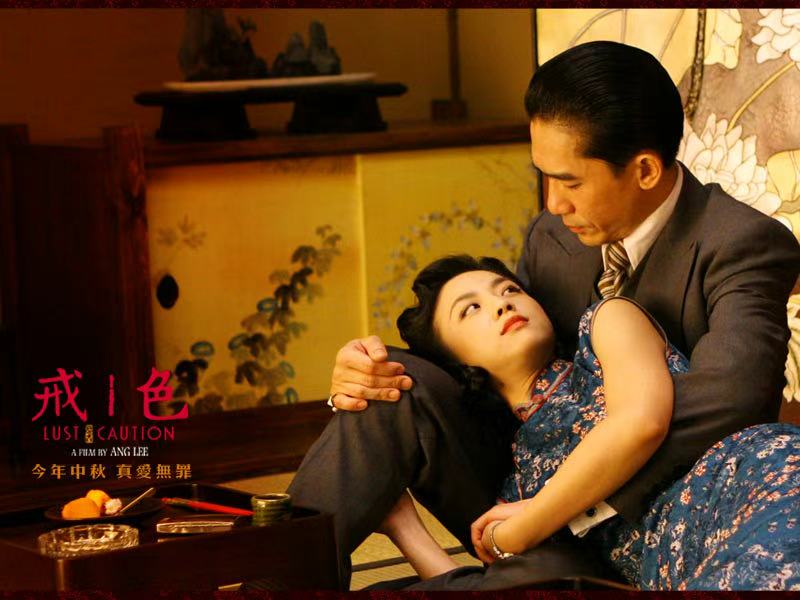
When I first encountered the term male gaze, the film that immediately came to my mind was Lust, Caution (2007). Not only does the film show the cinematic structure of male gaze, but its real-world consequences reveal how women can still be punished for “being seen.” The gaze does not end when the film is over — it continues in the media, the industry, and public opinion.
The concept of male gaze was introduced by Laura Mulvey in 1975. She argued that mainstream cinema often adopts a visual structure based on a male perspective, where women are presented primarily as objects of desire. This gaze functions through three levels: the camera’s gaze, the male characters’ gaze, and the viewer’s gaze. Under this system, the woman becomes someone to be looked at, rather than someone who speaks or acts on her own terms.
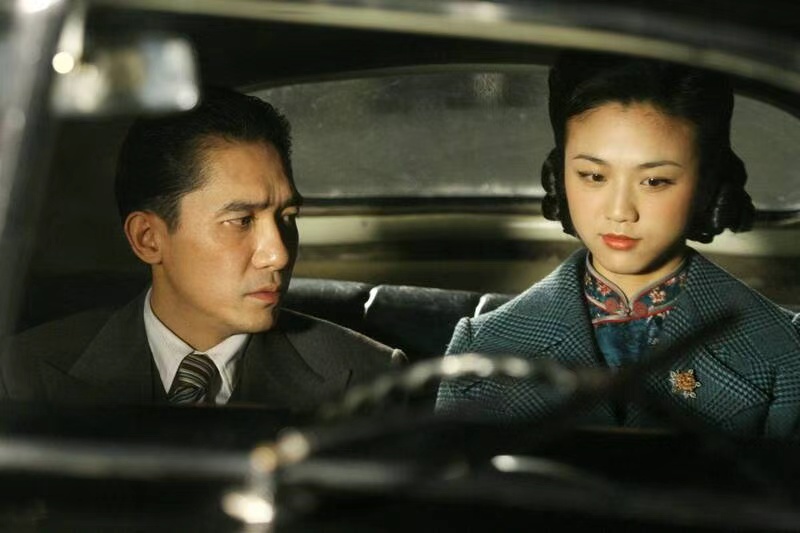
In Lust, Caution, this structure becomes particularly visible. The story takes place in 1940s Shanghai during the Japanese occupation. A female university student, Wong Chia Chi, is drawn into a political mission to seduce and assassinate a high-ranking official, Mr. Yee. She takes on the role of a wealthy wife and enters a dangerous relationship with him. As time goes on, her identity becomes blurred: Is she acting, or has she become the role that others constructed for her? In the final moment, she warns Mr. Yee to escape, and the mission fails. All members are arrested and executed, and Wong Chia Chi loses every identity she once had — student, spy, lover. She is left with nothing but a role she can no longer escape.
Visually, the film constantly places her body at the center of attention: the slow camera movements, the soft lighting, and the close-ups of her hands, lips, and clothing turn her into a visual focal point. Yet the audience rarely hears her inner voice. She does not drive the narrative — she is positioned within it. Her body speaks for her, while her subjectivity remains hidden. This is the core mechanism of male gaze: she is seen, but she is not truly heard.
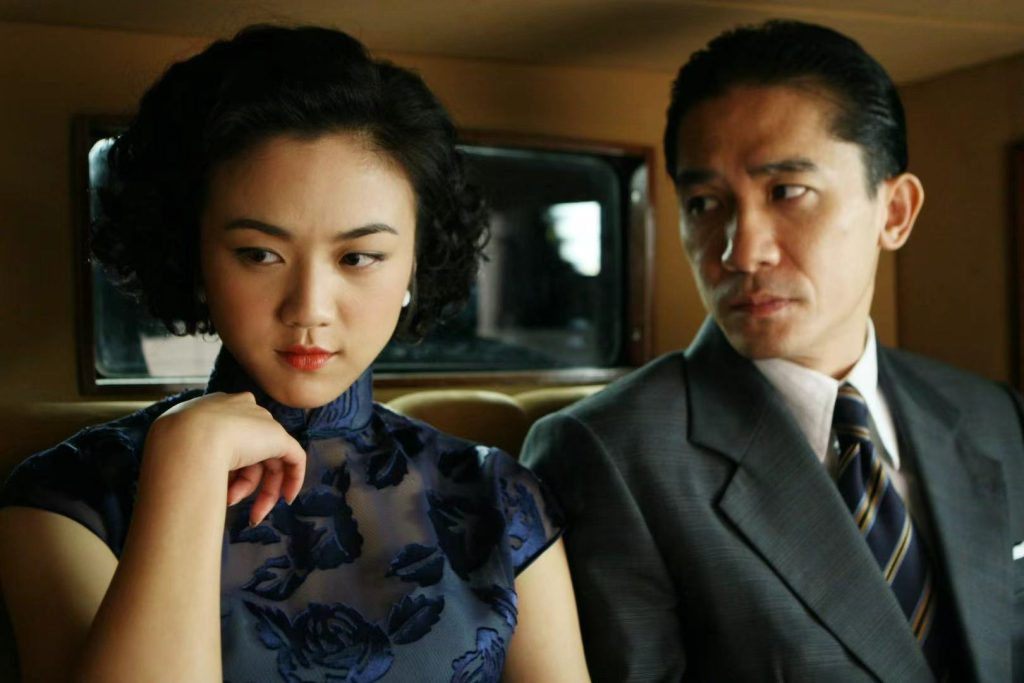
However, the most ironic part is that male gaze does not only appear in the film, it also appeared after the film was released. Tang Wei, the actress who played the lead role, faced intense online criticism and moral judgement for the explicit scenes. She was temporarily banned in Mainland China, losing commercial opportunities and film roles. Instead of discussing the film’s artistic value, historical reflection, or character complexity, the public focused on her body. Meanwhile, the director and the male actor received far less criticism. The same explicit content affected only one person — the woman. That alone reveals the unequal power of gaze in both cinema and society.
I believe the problem does not lie in the film’s boldness, but in the asymmetry of judgement. When a female performance becomes a moral test while a male performance is treated as professional acting, a clear imbalance is exposed. When the body becomes more significant than the role, cinema is no longer about storytelling but becomes a tool of discipline.
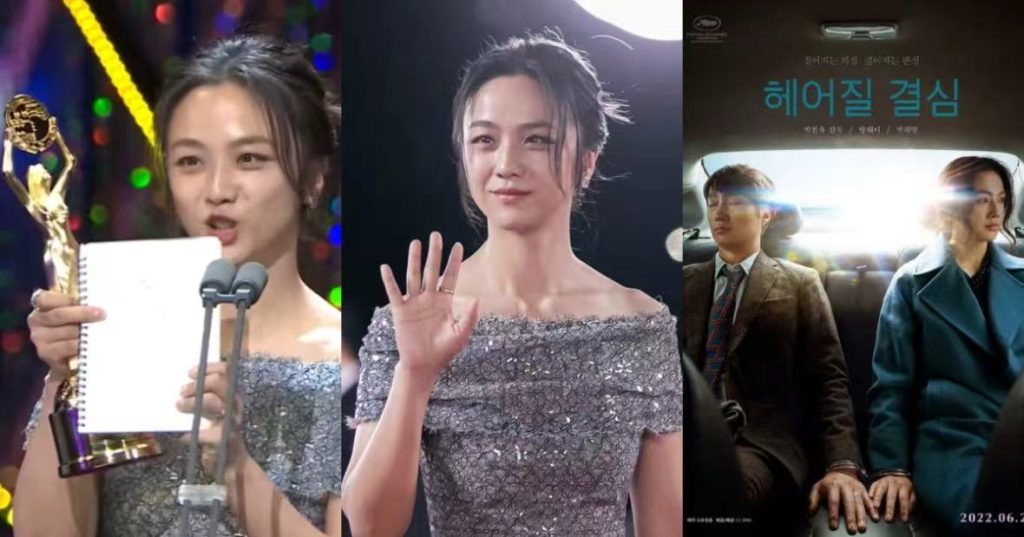
Fortunately, Tang Wei rebuilt her career through her own strength. She began working internationally and eventually gained recognition again. Her experience demonstrates that women are not merely objects to be seen — they can reclaim agency through persistence and skill. But the years of silence she endured are evidence of how male gaze operates beyond the screen, shaping careers and limiting artistic freedom.
In the broader film industry, women are still often expected to carry the burden of morality. Accepting a role is sometimes not a professional decision — it becomes a question of “how far is too far?” Their choices are judged more harshly than men’s, and their careers may be shaped not by talent but by how their bodies are remembered. This makes it difficult for women to fully exercise artistic freedom, because every decision risks being reduced to a question of shame or virtue.
Therefore, discussing male gaze is not simply about film theory. It is about how society watches, judges, and restricts women — even when they are acting. It is also about a universal desire: that every person, regardless of gender, should be able to pursue their goals through ability rather than through conformity to someone else’s gaze. We need a more equal visual culture — one where actors are defined by performance, not by their bodies. Perhaps the real question is this: In a culture of constant watching, can we still look at a film with fairness and empathy? When we stop staring at the actress’s body, maybe we can finally begin to understand what the performance was truly about.
References
Lee, A. (2007) Lust, Caution [Film]. USA/China: Focus Features.
Mulvey, L. (1975) ‘Visual Pleasure and Narrative Cinema’, Screen, 16(3), pp. 6–18.


Wow, this blog post is so well-written! From the shots focusing on Wong Chia Chi’s body and her blurred identity in Lust, Caution, to the public opinion backlash Tang Wei faced after the film’s release this is such a brilliant tie-in: it takes the “male gaze” from the film’s cinematic language and links it directly to real-world gender double standards. Especially that line about “she is seen, but she is not truly heard” it hits the nail on the head when it comes to that feeling of women being objectified and their subjectivity being sidelined!
And then later, when it talks about how women in the entire film industry have to carry this “moral burden” even wrestling with whether to “push boundaries” when taking a role this part really resonates so much! Though, would adding a line or two about recent works that push back against this gaze give the post a stronger sense of contrast? Of course, the content as it is is already super insightful!
Tang Wei’s performance in Lust, Caution confronts the male gaze head-on: her portrayal of Wang Jiazhi oscillates between being objectified and claiming agency, using subtle gestures and raw vulnerability to subvert the male-centric lens that frames her character. Though the role sparked debates about exploitation, it showcased her ability to turn the male gaze’s constraints into a tool for emotional depth. Later, in Korean melodramas like Decision to Leave, she redefined her on-screen persona, crafting nuanced, self-possessed characters that resist simplistic objectification, earning acclaim and awards. Her journey proves how an actor can build a cross-border career.