
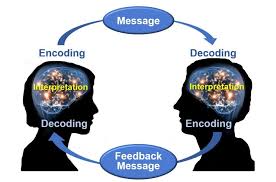
When we think about media, whether it’s a Netflix series, a political speech, or a TikTok video, it’s easy to assume that what we see is exactly what the creator intended. However, in 1973, cultural theorist Stuart Hall introduced the influential Encoding/Decoding Model, which shows that audiences don’t just receive messages: they actively interpret them. His theory remains essential for understanding how media, power, and meaning interact in contemporary culture.
In 1980, Hall’s theory fundamentally reshaped how we think about media messages and their audiences. Instead of assuming that media organisations produce messages and audiences simply absorb them, Hall proposed a far more dynamic process: one in which meaning is actively created, negotiated, and sometimes resisted.
Hall’s background as a Jamaican-born scholar working in Britain deeply shaped his perspective. He was influenced by the ways in which race, class, and identity shape people’s perceptions of the world. This sensitivity is reflected in his Encoding/Decoding model, reminding us that interpretation is always influenced by lived experience.

What is Encoding?
Encoding is the process through which media producers create a message. This involves making deliberate choices by using language, images, sounds, framing, and tone that reflect specific assumptions, values, and cultural perspectives. These choices are shaped by broader social contexts: institutions, political ideologies, professional routines, and dominant cultural norms.
What is Decoding?
Decoding refers to how audiences interpret the messages conveyed in media. Stuart Hall argued that meaning isn’t fixed; it’s negotiated between the message and the viewer’s own social background, experiences, and beliefs. Audiences are never passive; they bring their own perspectives to what they watch, read, or hear.
Why does it still matter today?
Encoding and decoding remain highly relevant in a digital media landscape where messages circulate rapidly, and audiences respond immediately. Social media, in particular, shows how meaning is constantly reinterpreted. A brand advert might be mocked through memes, a political speech may be dissected on TikTok, and a film can spark contradictory interpretations within hours of its release.
The theory also highlights the concepts of power and representation. If the Media encodes messages based on dominant ideologies, then decoding becomes a space where those ideologies can be challenged. In this sense, audiences aren’t merely consumers; they are cultural participants with the ability to resist, reinterpret, and reshape meaning.
Stuart Hall’s Encoding/Decoding model offers a powerful framework for understanding how communication really works. It reminds us that media messages are never straightforward and that audiences play an active role in producing meaning. In a world with so much content, the ability to recognise encoding strategies and reflect on our own decoding practices is more important than ever.


