

What is the Male Gaze?
The Male gaze is a concept from feminist theory that describes how women are often depicted in media from a male perspective, often presenting them as sexual objects for the pleasure of male viewers. Over time, the theory has been adopted across various fields, including advertising, fashion, social media, and numerous other visual disciplines, becoming a central means of exploring how gendered power operates. The term “male gaze” was first introduced by Laura Mulvey in her seminal essay “Visual Pleasure and Narrative Cinema” (1975).
Mulvey identified three forms of looking that structure this gaze: the gaze of the camera, the gaze of male characters within the narrative, and the gaze of the audience. In mainstream cinema, the camera often lingers on women’s bodies, framing them in sexualised or fragmenting shots. Within the story, male characters frequently observe women in ways that reinforce their own dominance. As viewers, we are encouraged to identify with this perspective, regardless of our gender. The effect is a cultural system where women are presented as “to-be-looked-at” rather than active participants. Understanding the male gaze is important because it highlights how seemingly harmless images contribute to shaping broader ideas about gender. When women are consistently represented as passive, decorative, or primarily valued for their appearance, these messages influence how society treats women and how women learn to see themselves. The male gaze is not only something acted upon by women; it can also be internalised, shaping behaviour, self-image, and aspirations.
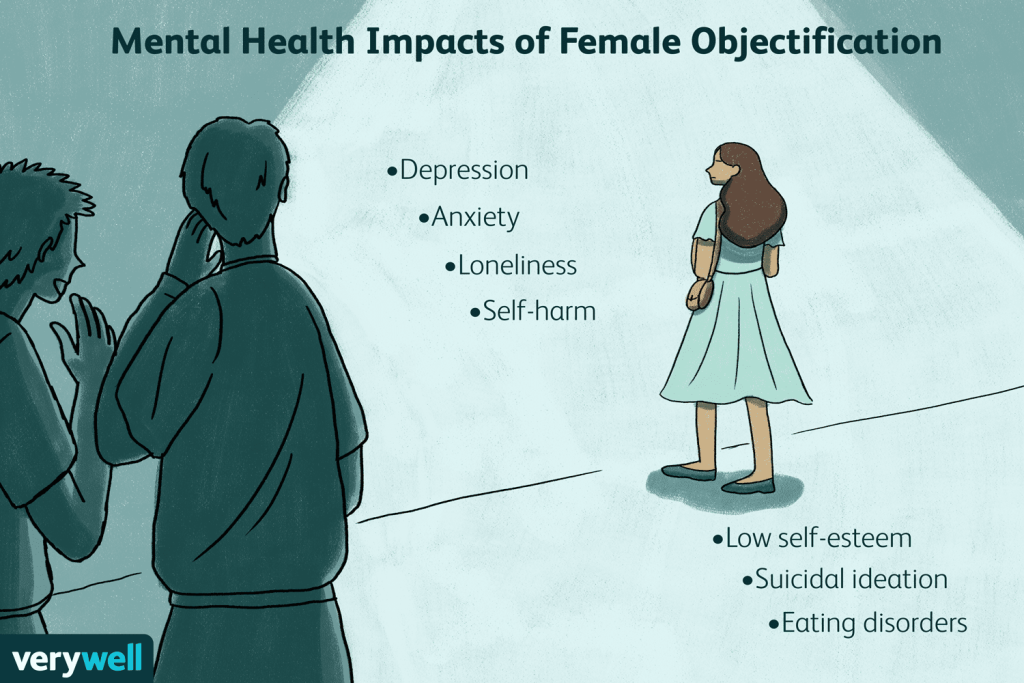
Laura Marvey focused on mainstream Hollywood Films and gathered that they are created to reproduce dominant male heteronomative ways of looking. This mainly occurs when the audience is put into the perspective of a heterosexual male (1975). Although Mulvey was writing about Hollywood films, the idea stretches far beyond the cinema screen. You can see it in everyday advertising, where women are often posed or styled in ways clearly meant to appeal to a heterosexual male viewer, even when the advert has nothing to do with gender or sexuality at all. The same thing happens in fashion photography, where the female body is frequently treated as the main attraction rather than a person with a story or personality. On social media, especially platforms like Instagram and TikTok, these pressures can feel even more intense. So many trends subtly push women and girls to present themselves in polished, sexualised, or carefully curated ways that fit old, objectifying expectations. It’s everywhere, and it shapes how many people feel they should look and behave online.


