


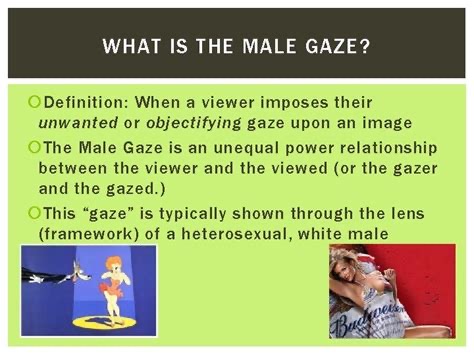
- What is the “Male Gaze”? The term “male gaze” was first introduced by Laura Mulvey in her seminal essay “Visual Pleasure and Narrative Cinema” (1975). She observed that the lens and narrative structures of traditional Hollywood cinema often depict women as objects of aesthetic pleasure and desire for a male audience, while men serve as active spectators and meaning-makers. This theory has since been widely applied to advertising, fashion, social media, and various other forms of visual culture, becoming a fundamental tool for examining gender power dynamics.
- The Male Gaze in Recent Works The upcoming short film anthology “The Male Gaze: Bitter Sweet,” set for release in 2024, features works from six countries, including Mexico, Portugal, and Brazil. These pieces explore the manifestation and conflict of the male gaze through lenses of family, memory, and same-sex affection within different cultural contexts. By utilizing diverse perspectives, the film reveals that the male gaze is not a singular Western discourse but a multifaceted phenomenon within the framework of globalization.
- The Male Gaze on Social Platforms and Women’s Self-Resistance On China’s short video platform Douyin, female creators often employ a satirical approach to mimic male archetypes such as the “mansplainer” and the “ordinary-but-confident man” to expose and ridicule traditional male authority. This type of content illustrates a “digital female gaze”: women are no longer passively subjected to scrutiny but actively wield the language of the lens for self-expression and critique. Moreover, Ana Francis’s master’s thesis “From Film to Filter: The Male Gaze and Plastic Surgery” further indicates that male gaze dynamics have infiltrated daily aesthetic practices, such as smartphone filters and cosmetic culture, creating a reinforcing cycle between online and offline experiences.
- The “Female Gaze” as a Potential Solution In “Transcending the Boundaries of Male Gaze by Embracing Variability through Female Gaze” (2024), Shreyoshi Dhar posits that the female gaze is not merely an inversion of the male perspective but a diverse and variable mode of viewing. It emphasizes the agency of female subjects, allowing them to be both observers and the observed within narratives, thereby dismantling traditional binary oppositions. Vikas Sharma’s forthcoming book “Female Gaze in Bollywood” (2025) further extends this concept to the Indian film industry, analyzing how contemporary Bollywood reshapes male images and presents diversified gender relationships through a female perspective. The text asserts that the female gaze can “humanize” male characters, prompting audiences to engage emotionally rather than reducing them to mere objects.


Your post gives a very strong and well-organized explanation of the male gaze. I really like how you not only introduce Mulvey’s theory clearly, but also connect it to global film works, social media practices, and recent academic research. The examples from Douyin, international short films, and studies on filters make your discussion feel very updated and meaningful. You also explain the idea of the female gaze in a thoughtful way that shows good understanding of gender theory. Overall, this is a very insightful and well-supported piece of writing.