

Have you noticed that in both Western blockbusters and Chinese idol dramas, women are often presented in similar ways? I would like to use the “Male Gaze” theory proposed by Mulvey in 1975 to explain this phenomenon. She believes that mainstream films and television often view women from the perspective of heterosexual men, making women the objects of “visual pleasure”. Even today, this framework can still explain many ways of image representation in both China and the West.
In many contemporary TV series, we can still see objectifying shots, such as lingering close-ups on women’s bodies or framing that emphasizes vulnerability. For instance, in the film “The Substance”, there are numerous shots from a male gaze perspective. The director uses close-ups of the female lead’s breasts and buttocks to create a “perfect image”, demonstrating how women are gazed at, expected of, and ultimately objectified.

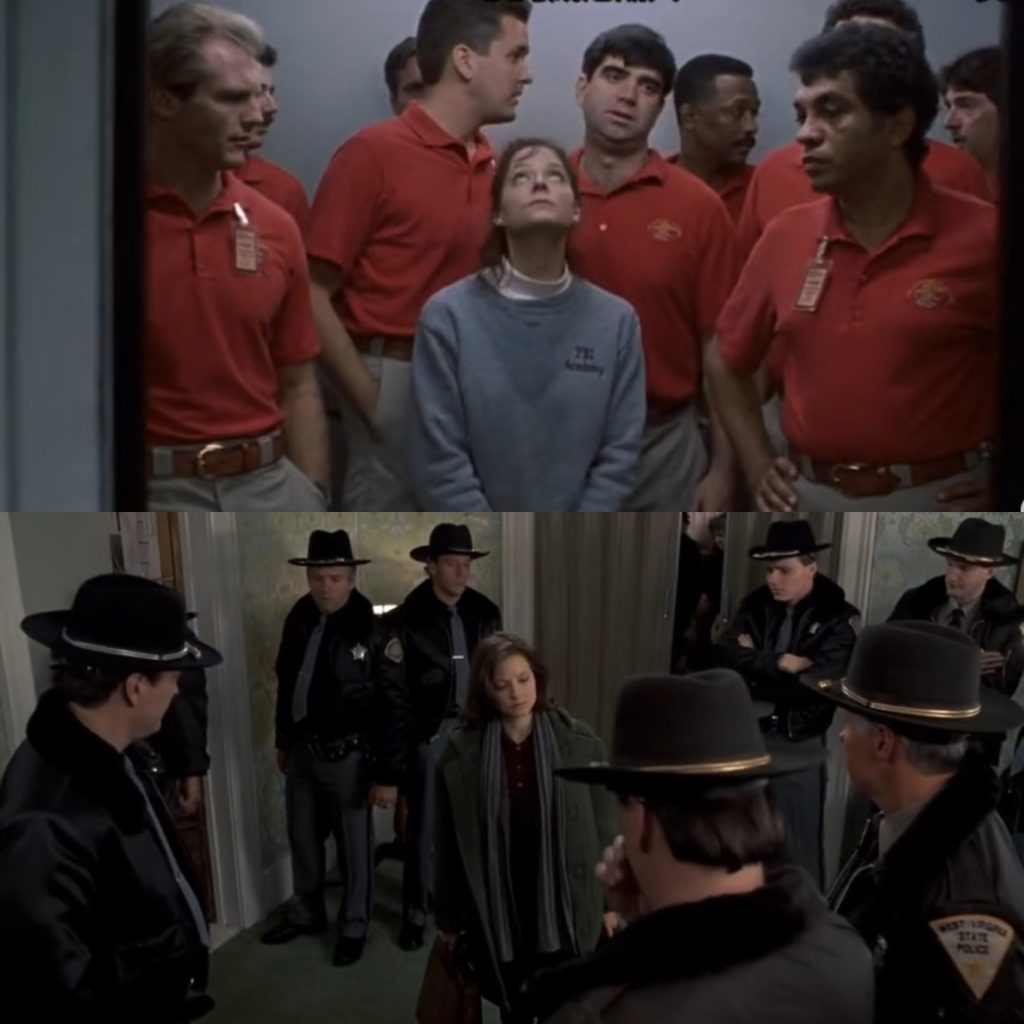
In “The Silence of the Lambs” (1991), although Clarice is a female character with strong agency, the film features numerous shots that emphasize the male gaze upon her – from the stares of her male colleagues in the training room elevator to the scrutinizing looks of the police officers at the investigation site. This visual arrangement reinforces what Mulvey described as “the positioning of women as objects to be looked at.”
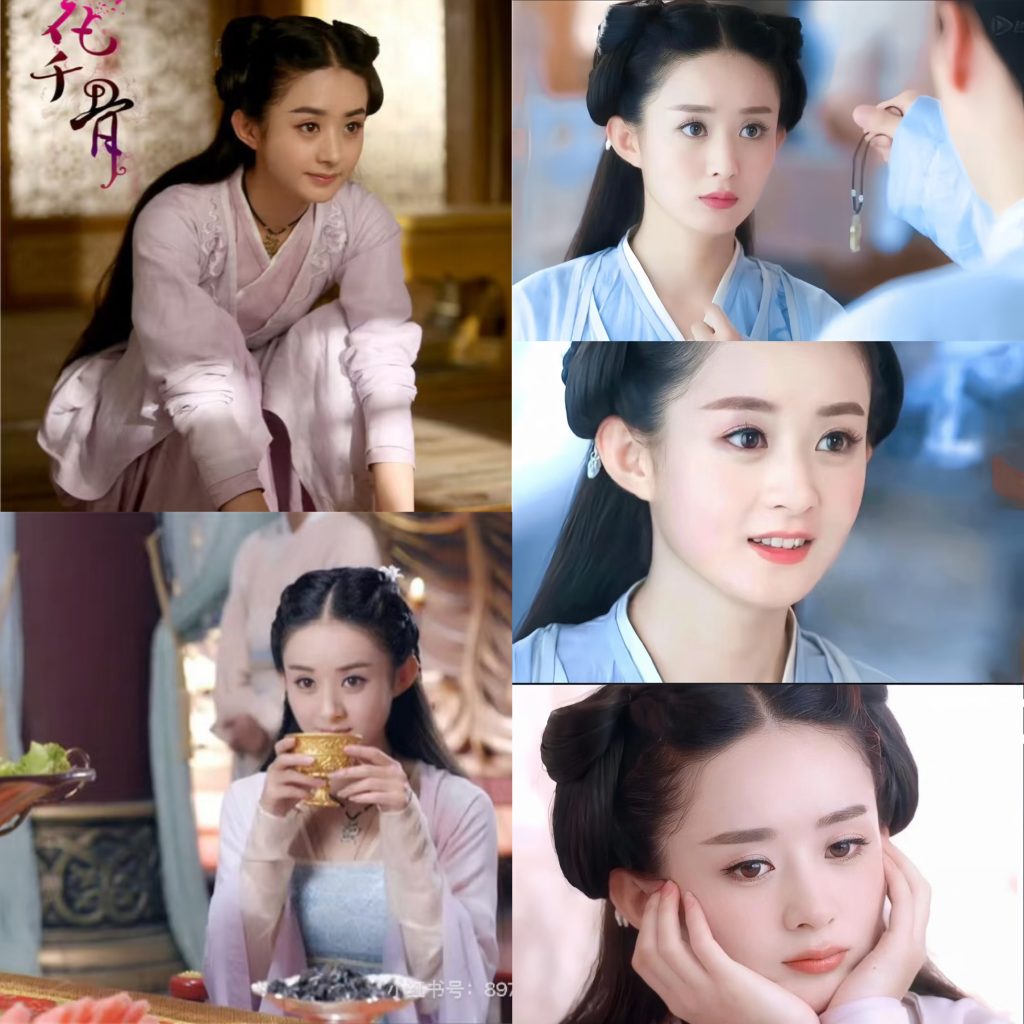
Not only in Western films and TV series, but also in some early Chinese idol dramas, there are many similar phenomena. Most of the early idol drama screenwriters preferred to portray the female lead as “naive, innocent and sweet” and “fair, young and slender”. Take “The Journey of Flower ” as an example. The scenes in the drama often use soft light, slow motion and beauty filters to highlight the female lead’s appearance, making her seem more like an object to be admired rather than an actor driving the plot. This also confirms Mulvey’s viewpoint.
However, some contemporary new works attempt to reflect on or even subvert this logic. For instance, the film “Barbie” (2023) no longer treats Barbie as a visual object to be gazed upon but instead has her confront head-on how society “gazes” at and shapes women. When Barbie enters the real world, she realizes for the first time that the standards she once accepted were never neutral. This self-awareness and reflection on why she should conform to these gazes closely echo Gill’s “post-feminist sensibility”, embodying what Gill describes as women’s internalization and resistance to cultural norms. As a result, “Barbie” not only reflects on male gaze but also turns it around: Barbie transforms from being the object of gaze to an active critic.

Overall, despite the increasing self-reflection of the media, the male gaze still profoundly influences the construction of female images. Recognizing this helps us consider: Who is in control of the narrative in images? What other possible alternative perspectives are there?
References List
- Mulvey, L. (1975). Visual Pleasure and Narrative Cinema. Screen, 16(3), 6–18.
- Gill, R. (2007). Postfeminist Media Culture: Elements of a Sensibility. European Journal of Cultural Studies, 10(2), 147–166.


This topic, it made me realise how similar female characters look across totally different types of shows. I always thought Chinese idol dramas and Western movies were really different, but when you point out the way women are filmed, it actually lines up a lot. The examples you gave made it easy to see what you meant, especially “The Silence of the Lambs.” Even though Clarice is strong and smart, the camera still reminds us that she’s being stared at by the men around her. I never really paid attention to those shots before.
The point about early Chinese idol dramas was also very true. The whole “innocent, cute, sweet” thing is everywhere, and the lighting and filters really do make the characters feel more like objects to look at instead of people with their own story. It’s kind of strange how normal that became.
I liked the part about “Barbie” too. That movie really shifts things by letting the main character question the expectations put on her instead of just being another perfect-looking figure on screen. It’s nice to see a film actually address the problem instead of repeating it.
Overall, this made me pay more attention to who the camera is “working for” in a scene. Once you start noticing the male gaze, it’s hard to ignore it in other films and dramas.
You did a great job of bringing in lots of examples from different cultures, perspectives and representations of the male or female gaze. Barbie is a really interesting example of almost poking fun at the male gaze (through that monologue that points out the contradictions of many expectations on women). But I also appreciated you pointing out less obvious examples, like the way Clarice in The Silence of the Lambs is literally being gazed at by men. This was a really great analysis of the male gaze and how it continues to impact our media and perceptions of women.