

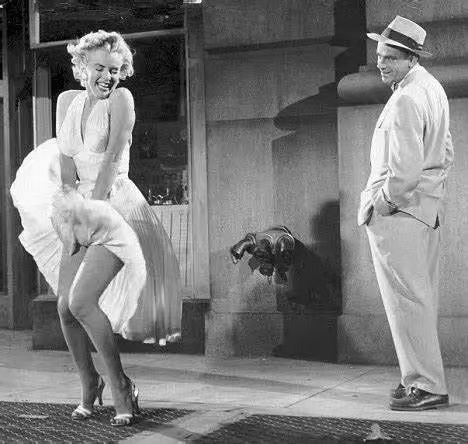
In media studies, “male gaze” is a crucial concept for understanding how women are presented in popular culture. This term was coined by scholar Laura Mulvey in 1975, who pointed out that mainstream images often default to a male perspective, with women as the objects of viewing. This viewing structure is not confined to the professional field of film; it profoundly influences the creation of the entire visual culture, including advertising and social media.
John Berger (1972) said: “Men look at women. Women watch themselves being looked at.” That is to say, in many media narratives, women are not merely displayed; they are often designed to be watched.
On-Screen Examples of the Male Gaze
As superhero movies have become a global cultural phenomenon, this gendered viewing approach is particularly evident in the film scenes, and thus has become an important entry point for observing male gaze.

In “Iron Man 2” (2010), Natasha Romanoff’s debut was more focused on her appearance and body posture rather than her combat skills. When the camera was used to portray her character, it often presented her through a “drawing attention” approach.
At this stage, Natasha’s image more closely aligns with the “sexualisation culture” phenomenon discussed by Gill (2007), where the female body is separately utilized as a means to attract attention.
However, in the subsequent works of the MCU, the character portrayal gradually emphasized her emotions and combat strategies, and the camera shots also focused more on her actions as the “subject” rather than on her body.
In “Suicide Squad” (2016), Harley Quinn’s character was highly sexualized, with exposed clothing and numerous close-up shots of her body. Even the actress Margot Robbie herself has stated that these shots carried a male gaze.
However, in “Birds of Prey” (2020), directed by a female director, Harley Quinn is presented in a significantly different way. For instance, her costumes are less revealing, and the camera focuses more on her actions and emotions rather than her body itself. This indicates that when the creative power changes, “who is in control of the gaze determines the image” also changes.
The common point of these two examples is that male gaze is not merely a cinematic language, it is a media habit. And this habit can be adjusted and replaced.
Just as Gill (2016) pointed out, the politics of visibility involves women being constantly observed in the media. However, whether they can be presented as their own subjects is a process that is constantly changing.
The transformation from Natasha Romanoff to Harley Quinn also demonstrates that female characters do not need to exist through being stared at. The media can create more complex and realistic female images.
references:
Berger, John. Ways of Seeing. Penguin Books, 1972
Gill, Rosalind. “Postfeminist Media Culture.” European Journal of Cultural Studies, 2007.
Gill, R. (2016). Postfeminism and the media. In C. Carter, L. Steiner, & L. McLaughlin (Eds.), The Routledge companion to media and gender. Routledge.
Mulvey, Laura. “Visual Pleasure and Narrative Cinema.” Screen, 1975.


I completely agree with your idea that the male gaze is not just a cinematic language, it is a media habit that can be changed and replaced. I think the two examples you used clearly illustrate this point. Your blog made me realise how we watch films is actually trained, including which characters “are watched” and which shots are seen as normal. Because of these habits, images of women are often oversimplified and reduced to appearances and bodies. When the control of creation and production shifts, female empowerment can become visible. This also reminds me that as audiences, we should also adjust how we “watch” and avoid being misled by camera techniques. Females in works can be powerful or vulnerable, but these traits should serve the characters themselves, rather than a desire to gaze at females. Overall, I think your blog offers a thought-provoking perspective.
This blog clearly demonstrates how the “male gaze” shapes the portrayal of women in films. However, I believe it can be further explored: the issue is not merely about how the camera views women, but rather “who has the right to determine the perspective”. As mentioned in the article, when the gender of the director or creator changes, the way female characters are presented also varies, which indicates that the “gaze” is essentially a power structure. Compared to discussing the ways in which women are viewed, I think it is more important to explore why women have always been in the position of being “viewed”, and why this structure is so hard to break in the entertainment industry.