
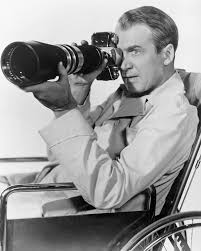
One concept keeps coming up when discussing gender and representation: the male gaze. The phrase was first used by Laura Mulvey, a cinema theorist, to define how visual culture, particularly film, presents women as objects viewed via a heterosexual male lens. However, the idea is not limited to cinema theory. It appears in everyday encounters, relationships, social media, and advertising. Bell Hooks and sociologist Erving Goffman are two writers who help us understand the depth of this relationship and how culture can undermine it.
The Male Gaze: Mulvey’s Starting Point
Mulvey contended in her seminal essay from 1975 that mainstream cinema is designed to appeal to the viewpoint of male audiences. Men are portrayed in films as dynamic heroes with agency, whereas women are frequently presented as passive, attractive objects meant to be admired.
Mulvey divides this into three “looks”: the camera’s appearance, the characters’ appearance in the movie, and the audience’s appearance.
According to her, all three have historically collaborated to put male pleasure first. Her claim made it possible for feminist cinema theory to examine who is in charge of pictures and who is allowed to be portrayed as a complete human being.
bell hooks: Expanding the Conversation
Bell Hooks challenges us to consider race, power, and resistance while Mulvey draws attention to structural misogyny in films. In Black Looks (1992), hooks challenges Mulvey for assuming a universal female experience that ignores how Black women occupy distinct connections to looking.
Hooks presents the concept of the oppositional gaze, explaining how Black audiences develop a critical eye for films that marginalise or misrepresent them. Hooks argues that staring may also become a kind of power, particularly when marginalised individuals resist prevailing narratives, whereas Mulvey mostly views the gaze as oppressive.
Her art serves as a reminder of the connections between racism, class, and historical injustice and the male gaze. Not all audiences view images unawares, and not all women are objectified in the same way.
Goffman: Everyday Performances and Gender Display
Sociologist Erving Goffman didn’t write directly about the male gaze, but his work on gender display helps explain why these visual patterns feel so familiar. In Gender Advertisements (1979), Goffman analysed thousands of ads and found consistent patterns in how men and women are posed.
Women were often shown as:
- passive or submissive,
- childlike or playful,
- sexually available,
- reliant on male authority.
Men, conversely, were depicted as strong, grounded, and in control.
Goffman’s analysis shows that the logic behind the male gaze, women as decorative, men as active, is baked into our wider visual culture. These images teach us how to perform gender, shaping how we move through public spaces, social media, and relationships.
Why the Male Gaze Still Matters
The world we live in today is overflowing with pictures. Advertising, Instagram poses, and TikTok trends all promote idealised versions of femininity that are frequently influenced by what will attract interest, likes, or desire.
Knowing the male gaze enables us to identify: • how women learn to view themselves through the eyes of others; why certain aesthetics predominate online and how marginalised groups resist through new modes of representation.
By discussing Mulvey, Hooks, and Goffman, we can see that the gaze is a social force that influences our perceptions of bodies, beauty, and identity rather than only a concept from film theory. However, as Hooks demonstrates, viewers are not helpless. Who gets to see and who gets to be seen can be changed through critical looking, varied representation, and new kinds of narrative.
References
Goffman, E. (1979) Gender Advertisements. New York: Harper & Row.
hooks, b. (1992) Black Looks: Race and Representation. Boston: South End Press.
Mulvey, L. (1975) ‘Visual Pleasure and Narrative Cinema’, Screen, 16(3), pp. 6–18.
Mulvey, L. (1989) Visual and Other Pleasures. Basingstoke: Macmillan.


This is an excellent analysis of the male gaze! I like how you explained Goffman’s point of view of how women in ads were often portrayed as passive or submissive, childlike or playful, sexually available, or reliant on male authority. In contrast to how men were shown as strong and in control. Your point that the gaze isn’t just a film-theory concept but a social force shaping everyday behaviour comes through clearly. Your take on the relevance of the gaze in social media could be further expanded by using specific examples from the media to show how these patterns persist today. Overall, this is a thoughtful and well-structured blog that introduces these theoretical ideas in an accessible way. With a bit more elaboration on modern social media dynamics, it would be even better. Great job!
Great post! You really did an outstanding job of breaking down the male gaze and relating it to the work of Mulvey, hooks, and Goffman. One thing you could do to improve this post is insert a few examples of how all of these concepts relate to the real world, but overall this post was clear, insightful, and interesting.
This post does a great job connecting Mulvey’s foundational idea of the male gaze to the broader cultural systems that shape how we learn to “see” gender. I liked how you showed that looking can actually be a form of resistance. Overall, your post effectively demonstrates why the male gaze remains relevant. It influences how we perceive ourselves, how we behave, and what we consider ‘beautiful,’ but it also provides us with tools to recognise these patterns and challenge them. Great post!