
Stuart Hall coined the concept of encoding and decoding in communication in 1973, positing that in the interpersonal communication process, multiple meanings can be derived from different stages. A sender “encodes” a specific meaning into their words, symbols, gestures, tone, etc. Then the receiver “decodes” those symbols into their perceived meaning, which may or may not line up with the sender’s intended message. In this way, meanings can be misinterpreted and miscommunication occurs (Hall, 1973). Miscommunication, a very common occurrence in our lives, can be explained through this process.

This phenomenon reaches a new level in today’s digital communication. Without indicators like tone and gestures, it is easy for meaning to be misunderstood (or decoded to reach a different meaning from the sender’s intention). It’s a fairly common occurrence that someone misreads a sarcastic text as serious, or a serious message as a joke. In fact, in many online forums, users have started incorporating “tone indicators” to clarify intended meaning – including a “/sarcastic” or “/srs” (serious) before statements that might be misunderstood without the indicators and symbols of face-to-face interaction (Paavola, 2022). These tone indicators, also called “tone tags,” are just one way in which Internet users have adapted their communication methods to fill missing indicator holes and ensure meanings are decoded more closely to the sender’s intentions.
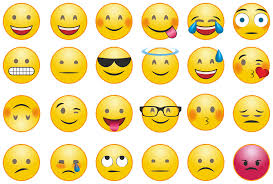
Additionally, in digital communication we have access to a new range of communicative symbolism – for example, emojis and emoticons (Highfield, 2018). Through a simple, tiny image, we can communicate complex emotions, and cultural context adds meaning beyond just the emoji. At first glance, emojis are a fun and sometimes silly way to add to our texts, but they actually hold a much stronger meaning in the sender’s encoding of their message, lending an important tone tool to the receiver as they decode it.
Emojis and tone indicators are small ways in which communicators have adapted to the digital realm. In this way, we’ve developed stronger tools for communicating and for deciphering our messages, and for communicating better as a whole.
###
Hall, S. (1973/1980) ‘Encoding/decoding’, in Hall, S., Hobson, D., Lowe, A. and Willis, P. (eds.) Culture, Media, Language. London: Hutchinson.
Hall, S. (2021) Writings on Media. Edited by C. Brunsdon. Durham: Duke University Press.
Highfield, Tim. “Emoji Hashtags // Hashtag Emoji: Of Platforms, Visual Affect, and Discursive Flexibility.” First Monday, vol. 23, no. 9, 1 Sept. 2018, https://doi.org/10.5210/fm.v23i9.9398.
Hsu, H. (2017) ‘Stuart Hall and the rise of cultural studies’, The New Yorker, 17 July. Available at: https://www.newyorker.com/books/page-turner/stuart-hall-and-the-rise-of-cultural-studies (Accessed: 17 November 2025).
Paavola, Alia. “Tone Indicators: A Master List, What They Are, and How to Use Them.” Www.textline.com, 6 Oct. 2022, www.textline.com/blog/tone-indicator-list.


I really enjoyed how clearly you explained Stuart Hall’s encoding/decoding model and connected it to everyday digital communication. Your examples of sarcasm being misunderstood or serious messages being misinterpreted are things I see happen all the time. I also like how you brought in tone indicators and emojis as modern “fixes” to these issues. It’s interesting to think about how something as simple as “/srs” or a single emoji can completely change how a message is read. Great post!