
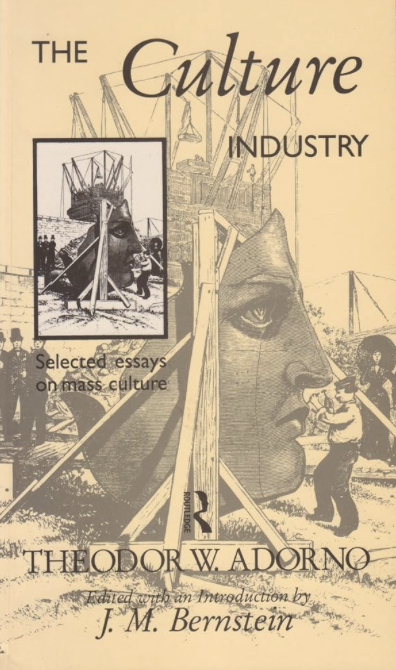
Introduction:
Have you ever found yourself wondering over why the same music gets viral on TikTok, why certain films get recommended on streaming platforms, or why social media trends just show up everywhere all at once? All of these can be explained using the theory of culture industry which has been constructed by the prestigious theorists Theodor Adorno and Max Horkheimer, who went to the Frankfurt School of critical theory.
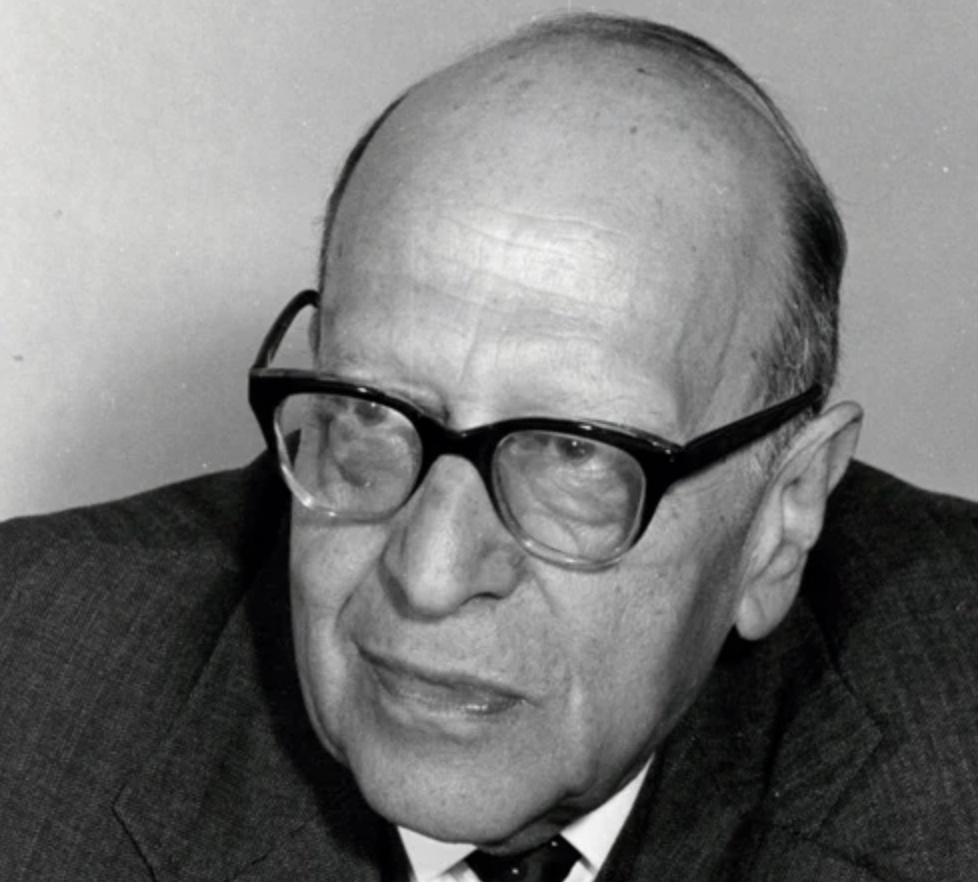
Max Horkheimer – According to Horkheimer, capitalism affects culture and how human think. He maintained that the mass production of entertainment serves as a distraction for individuals from social issues and makes them accept the social structure as it is rather than question it. With Adorno, Horkheimer also maintained that the culture industry could use human desires in order to impose conformity.
Understanding Culture Industry:
The term culture industry was created by Adorno and Horkheimer in their book Dialectic of Enlightenment, published in 1944 but translated into English in 2002. According to the authors, the culture industry was the product of the commodification of culture whereby profit making had become more important than the act of creation. Films, music and radio programmes tend to be made using standard formulas to attract viewers and consumers. In order to satisfy consumers’ needs Adorno & Horkheimer, 2002.
Mainstream films tend to employ common story lines, well known genres and sequels since they are considered safer from a financial point of view. Even when the audiences feel that they have a number of options available, most of the films are based on the same theme, such as the Scream Franchise from 1996-2026.
Culture Industry in today’s society:
Adorno and Horkheimer (2002) claimed that culture has become a commodity that has been produced primarily for monetary gains. Although it was created prior to the existence of the internet, the theory is still in relation in todays society. Social media platforms like TikTok, YouTube, and Netflix recommend content according to the interest and consumption behaviour of their audiences through algorithms. Even though it provides audiences with more options, they may tend to consume the same kind of content again and again. Adorno and Horkheimer (2002) claimed that the culture industry promotes standardisation, which means that there will be similarities in cultural commodities.
Popular and trending videos are able to catch more attendance from different target audiences. According to Hesmondhalgh (2019), media organisations have to find a balance between creative process and business interests since it affects the content that is provided via digital media.
Nonetheless, audiences can be active as well. Nevertheless, the content posted by audiences can be used to generate money for digital media platforms through views, data collection, and advertising. For example, people would be uploading TikTok videos of themselves creating memes and dances to voice their opinions. Some would say that them making these videos are creating and contributing to the culture.
Conclusion:
Culture industry theory allows us to understand how digital media influences society. Today’s entertainment is known to be TikTok, YouTube and Netflix, however in the end it is made to entertain people but also to make money Adorno & Horkheimer, 2002). While people have the ability to produce their own content, the role of media organisations in the popularity of certain videos cannot be overlooked (Hesmondhalgh, 2019).
References:
Adorno, T.W. and Horkheimer, M. (2002) Dialectic of Enlightenment: Philosophical Fragments.


