
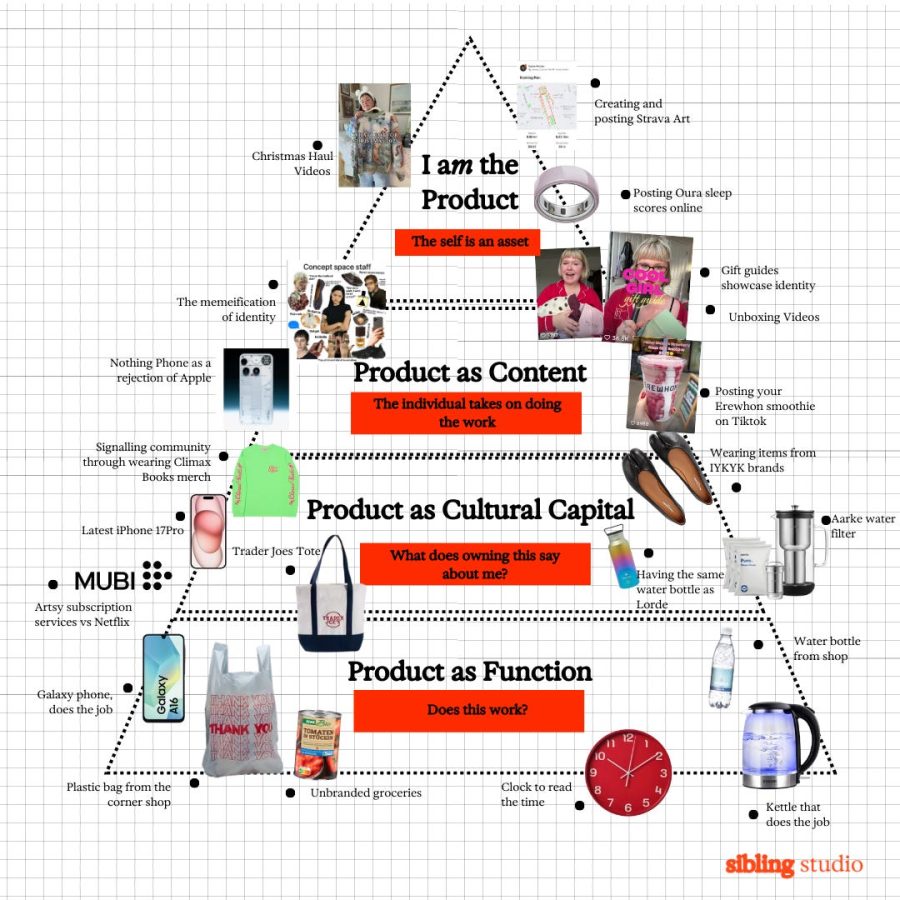
Why do we feel like we know influencers we’ve never met? From get ready with me (GRWM) videos of talking about their life to big relationship updates, this can create a sense of connection between creators and viewers. But, when influencers are doing this as a source of income, where does the person end and the product begin?
For this question, we can look at the concept of the ‘culture industry’, developed by Theodor Adorno and Max Horkheimer. In ‘The Culture Industry: Enlightenment as Mass Deception‘, they criticise culture becomes standardised and shaped but commercial interests (Adorno and Horkheimer, 2006). Despite being before social media, their theory helps explain how digital platforms turn identity into something profitable.
Looking at the popularity of GRWM videos on TikTok, a creator might discuss their day while getting ready and promoting a product. A brand can sponsor one of these videos with its promotion subtly embedded into content with the video not appearing as an ad. The creator is selling their personality and appearance, not just a beauty product, with perceived honestly helping. Their identity is part of the advertising.
Similarly, Arriagada and Bishop (2021) research how influencers battle tensions of commercial promotion and genuine relationships with audiences. Their research highlights a contradiction: creators must appear relatable to function as profitable brands. Therefore, authenticity becomes a marketable asset – the more personal the content feels, the more valuable that connection becomes.
But, this encourages questions of the consequences the influencers have personally. If their income relies on constant audience participation, even the most personal and boring parts of their lives become potential content. This can lead to the feeling of pressure of maintaining their recognisable online persona even if their self identity and interests change. This suggests that through the culture industry perspective, commercialisation can impact both what audiences consume, and how creators present themselves.
However, influencers are not necessarily fake, or audiences passive. Creators may genuinely enjoy sharing their lives, while viewers can engage without ever buying anything. Adorno and Horkheimer’s theory helps understand commercial pressures, but does not fully consider the creativity and personal autonomy of people participating in digital culture.
Reflecting on my personal use of TikTok, I can understand how a recommendation may feel more personal when it comes from a creator I consistently watch and enjoy. Alex L on TikTok is a beauty influencers with her own family show coming out on Netflix and although she promotes beauty products, I enjoy watching without feeling pressure of having to buy what she uses as I can simply enjoy what’s she’s talking about. This makes me understand how easily entertainment and marketing and become one.
Therefore, influencer culture shows how the culture industry’s commercial logic adapts to digital media. The product is not simply what influencers promote, with the influencer’s own identity increasingly becoming a part of what’s being sold.
References:
Adorno, T. W. and Horkheimer, M. (2006) ‘The Culture Industry: Enlightenment as Mass Deception’, in Durham, M. G. and Kellner, D. M. (eds.) Media and Cultural Studies: KeyWorks. Revised edition, pp. 41–72.
Arriagada, A. and Bishop, S. (2021) ‘Between Commerciality and Authenticity: The Imaginary of Social Media Influencers in the Platform Economy’, Communication, Culture and Critique, 14(4), pp. 568–586. https://doi.org/10.1093/ccc/tcab050.


