
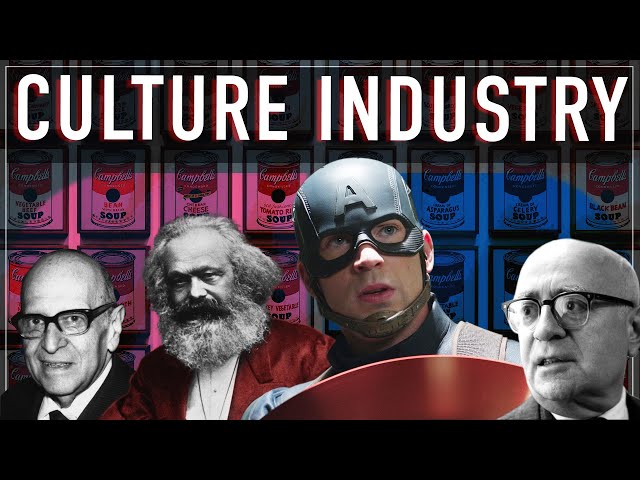
Social media has become such a normal part of everyday life that we rarely question how it influences our interests, opinions and behaviour. From TikTok trends, to Netflix recommendations, much of the content we consume is shaped by large media companies and digital platforms. This connects to the concept of the culture industry, developed by Theodore Adorno and Max Horkheimer, which explores how popular culture operates under capitalism and influences the way audiences think and behave.
Understanding the Culture Industry
Adorno and Horkheimer introduced the concept in Dialectic of Enlightenment (1944). They argued that culture was increasingly being produced as a commodity, with films, music and entertainment designed primarily to generate profit rather than encourage independent thought they believed that cultural products often followed familiar formulas, making them predictable and easier to sell to mass audiences.
A key aspect of this theory is standardisation. Although films, songs and television programmes may appear different, they often follow similar structures and conventions. This allows media companies to appeal to established audience preferences while reducing commercial risk. The theory also suggests that entertainment can distract audiences from questioning the social and economic systems around them.
The Culture Industry in the Digital Age
The culture industry remains relevant in contemporary digital media, particularly through platforms such as TikTok, Instagram and Netflix. Algorithms recommend content based on users’ previous activity, creating a personalised experience while also encouraging repeated consumption.
For example, when a beauty product becomes popular on TikTok, influencers and brands may repeatedly promote it until purchasing it seems almost necessary to follow the trend. This illustrates how cultural participation can become closely linked to consumerism. Audiences are not simply watching content; their attention and purchasing decisions can also generate revenue for platforms and advertisers.
This can be understood through Adorno and Horkheimers’ argument that culture is shaped by commercial interests. However, digital platforms introduce a new dimension: users also produce content, supply data and contribute to trends themselves. This makes the relationship between audiences and the culture industry more complex than a simple distinction between producers and consumers.
Do Audiences Lose Their Individuality?
Adorno and Horkheimer were concerned that standardised culture could discourage critical thinking and encourage conformity. Repeated exposure to similar beauty standards, lifestyles and opinions may influence what audiences consider desirable or normal. In this sense, the culture industry can help reproduce dominant values while presenting them as personal choices.
However, this argument has limitations. Audiences do not necessarily accept media messages without question. People can reinterpret content, challenge dominant representations and use social media to express marginalised perspectives. Digital platforms can therefore support creativity and resistance as well as commercialisation.
This suggests that the culture industry is influential, but its effects are not automatic. The ways people interpret media also depend on their experiences, identities and social contexts.
The culture industry provides a useful framework for understanding the relationship between capitalism, entertainment and audience behaviour. Adorno and Horkheimer’s theory highlights how commercial interests can shape cultural production and influence consumer preferences. Although digital media offers greater opportunities for participation and self expression, these opportunities still exist within platforms driven largely by advertising and profit. Ultimately, the theory encourages us to look beyond whether we enjoy media and consider who produces it, whose interests it serves and how it shapes our understanding of the world.


