
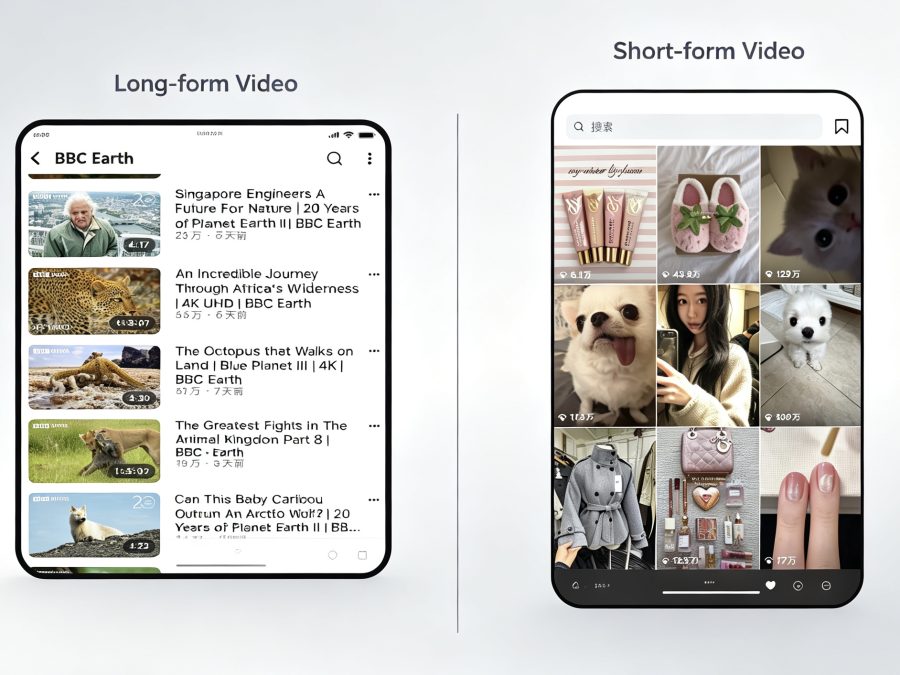
In my daily life, I find long-form videos often leave a stronger impression on me than short-form videos when I access or research information from digital media platforms. This observation reminds me of Marshall McLuhan (1964) famous argument that “the media is the message”. According to McLuhan, the form of media influences society more than the content it delivers. Instead of focusing only on what we watch, we should recognize how different media shapes our habits, attention and ways of thinking. This idea can be explored through a comparison between YouTube’s long-form videos and mainstream short-video platforms.
YouTube’s long-form videos often present information through extended explanations and relatively sustained narratives. Compared with rapidly changing short-video feeds, this format can offer viewers more opportunities to follow an argument, consider different perspectives and develop a detailed understanding of a topic. In this case, the “message” is not only the video topic, but also the medium’s ability to cultivate concentrated cognition. Mayer and Moreno (2003) explain that the way information is presented can influence cognitive processing and learning. This suggests that the educational value of long-form videos depends not simply on their length, but also on how information is organised and explained.
In contrast, platforms such as TikTok and Instagram Reels feature fast-paced content. These features may encourage users to consume information in shorter bursts and become accustomed to fragmented content. Some users may consequently find longer videos less appealing. However, this does not mean that short videos always lead to shallow thinking, as their effects may depend on individual viewing habits and the type of content being watched.
However, we should be cautious. Long-form video formats only create the potential for deep thinking. For example, when I feel the content is boring, aimless or doing other things at the same time. In these situations, I find it difficult to concentrate on this video and I will lose my patience.
Ultimately, the comparison between long-form and short-form videos illustrates how media formats may shape our everyday habits of attention and information processing. However, neither format automatically produces deep or shallow thinking. Their effects depend on how content is designed, how audiences engage with it and the purposes for which it is used.
Reference:
McLuhan, M. (1964) Understanding Media: The Extensions of Man. New York: McGraw-Hill.
Mayer, R.E. and Moreno, R. (2003) ‘Nine ways to reduce cognitive load in multimedia learning’, Educational Psychologist, 38(1), pp. 43–52.


I really enjoyed reading this, especially because it’s interesting to think about how the format of the content we consume can influence how we process information. I definitely understand your point about long-form videos potentially making it easier to understanding a topic, but I do often find myself going back to watching TikToks because, as they are short, they can fit in relevant information without the length YouTube videos. I agree that short-form content doesn’t equate to shallow thinking, but that it all comes down to how information in videos is organised and explained. This is why your point of individual viewing habits is especially important because it shows that a medium doesn’t affect everyone in the same way. Do you think platforms like TikTok could actually encourage people to learn about more topics in depth by introducing them to subjects they wouldn’t have come across on their own?
I enjoyed your comparison of long-form and short-form videos, especially how you connected everyday viewing habits to McLuhan’s theory. Your point that longer videos can support deeper understanding, while still depending on how we engage with them, stood out to me. It made me think about how easily we can watch something without really taking it in. I would also be interested to hear about a topic you have watched in both formats. Comparing what you remembered from each could help show how video length, editing and your reason for watching shaped your experience.