
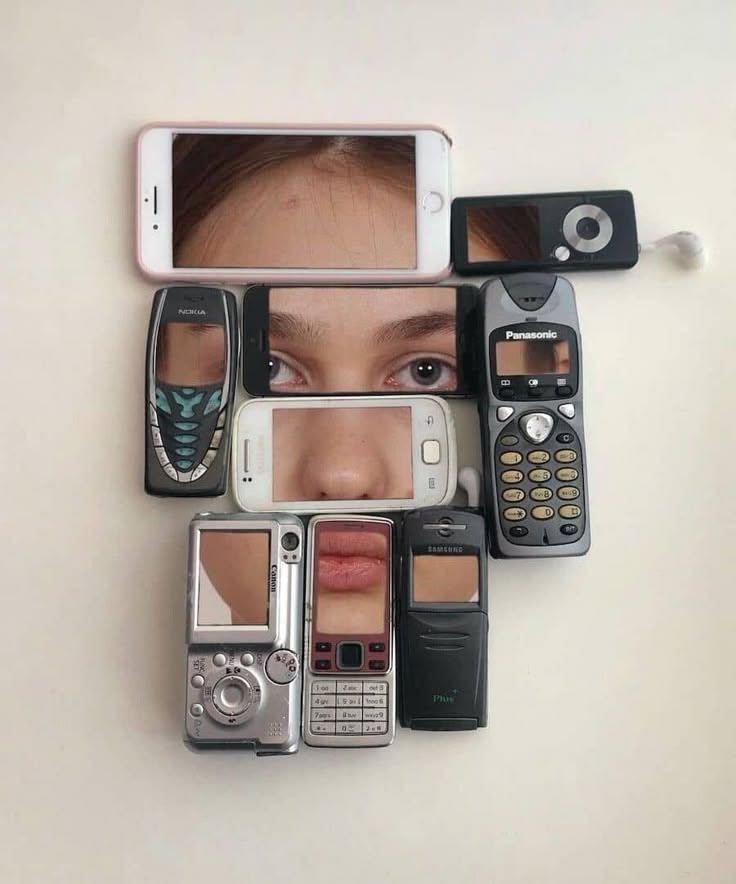
The Self We Share Online
In today’s world, social media has changed the way in which individuals project themselves and their identities. On social media sites like Instagram and Xiaohongshu, one has the freedom to decide which photographs and experiences of theirs to post. These choices affect the way in which people view these individuals online. While people will post only the good things that happen in their lives, they might not be representing their real life online. This makes me wonder just how much control do we have over our own online identities?
The Digital Version of Ourselves
Individuals tend to project themselves differently depending on the social setting and individuals present (Goffman, 1959). In this regard, he compares social interaction to performance, whereby individuals control how others see them. Similarly, this theory can be used to explain social media platforms such as Instagram. Individuals on Instagram may be selective when posting pictures or other posts so that they can portray a certain image. They are also selective according to who is following them. This means that individuals may share pictures or posts showing their success while keeping other issues in their lives private.
Identity in the Age of Social Media
On Instagram and Xiaohongshu, people post pictures of themselves which have been meticulously curated. These posts can lead one’s life to seem much more interesting and exciting than it really is. This constant exposure can then cause individuals to start comparing themselves to others. Research has found that browsing photos on Instagram of people who appear more impressive than oneself can have a negative impact on an individual’s body image (Taylor and Armes, 2024). This pressure may also influence what people choose to post. Some users may spend more time editing their photos, or avoid sharing moments from their lives that do not align with their ideal image.
The Self We Share Online
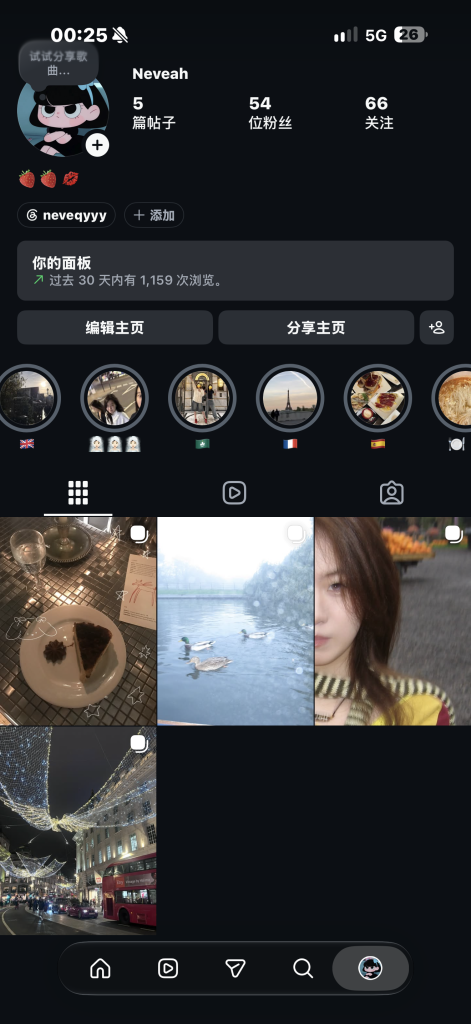
The Instagram page that I maintain indicates how my digital identity can be influenced despite the low level of interaction that I have online. Even though I do not post new photos on a regular basis, my profile has five photos that include myself as well as the pictures of the places I visit and foods I eat. I am also a fan of Instagram stories which I use to save memories of the trips I take. In case of anyone looking at my profile, it would be natural for them to think that traveling is a big part of my life without even knowing anything else about me. The thing that fascinates me is that I do not intentionally create an online image, but the photos I post still create a certain image.
More Than Just a Profile
The concept by Goffman sheds light on why people exhibit various selves, but in my opinion, digital identity is a much more complicated phenomenon than just managing appearances. Social networks provide people with an opportunity to show their personality, but their interpretations by other people are not always in our power. Thus, for example, a person can be perceived as self-confident and active in social networks, whereas being quite different in real life. It doesn’t mean, however, that the former version is not true. Both can be true representations of some parts of one’s personality.
Reference
Goffman, E. (1959b). The presentation of self in everyday life. New York: Anchor Books.
Taylor, J. and Armes, G. (2024). Social comparison on Instagram, and its relationship with self-esteem and body-esteem. Discover Psychology, [online] 4(1). doi:10.1007/s44202-024-00241-3.
Bennet Maya (n.d.) Digital Identity [Online image]. Pinterest. Available at: https://uk.pinterest.com/pin/1105070827347484066/ (Accessed: 2 November 2026).


