
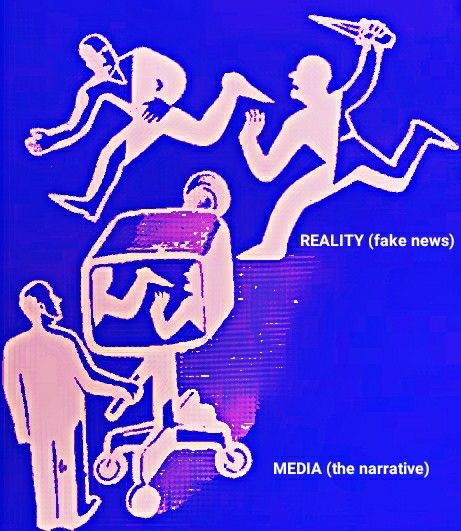
The News We See Is Not the Whole Story
Though news is typically reported objectively about what has happened, the news that actually gets out has already been processed through the eyes of the editors. It is media organizations that choose what is news-worthy and what information to include or exclude from the story. Such choices can affect the way the public views the events before having another point of view. Does the news inform or shape public opinion?
Understanding Manufacturing Consent
Consensus theory studies the way in which power determines the information disseminated by the media through its news outlets. In consensus theory, the media is not treated as an independent agent, but the focus is made on institutional interest. Theine and Sevignani (2024) study the correlation between the ownership and power in the media, stressing the role of ownership in media work. In this way, it becomes possible to understand why some opinions get more coverage than others. At the same time, media power does not necessarily have political origin – economic interests and internal priorities play their roles as well.
The Power of Selective Reporting
Selectivity has taken on new meaning with the emergence of social media. Kim and Anderson (2025) demonstrated in their study that political opinions affect the selection of news to be circulated and the presentation of certain issues on Reddit. For instance, two news channels covering one political event could highlight different issues. In one case, the attention would be drawn to the actions of the government, while in the other, it would be placed on the anger of citizens. Even though all the information provided is truthful, different impressions may be formed based on which news channel is accessed first.
My Experience with News Media
I often get information on events from various sources, and at times it is evident to me that there is an emphasis on particular information regarding the event and the absence of other information about the same. This makes me feel that political stances and interests of institutions might at times have an impact on such decisions. Nevertheless, I am hardly motivated to carry out research regarding this matter unless I find it interesting. Sometimes even after realising this myself, I do not go ahead to look for another viewpoint regarding this issue.
Can We Escape Media Influence?
In my opinion, it is not possible to be fully independent from media messages. The first version of the story that we get can form our opinion before we analyze it through other points of view. While audience can compare various sources and doubt certain versions of stories, they need to spend some time on it. In this way, we see how relevant this theory is and at the same time how limited it is. We see how interest groups might influence information through media, while the audience has its role too.
References
Kim, R.M. and Anderson, A. (2025). The agenda-setting function of social media. Proceedings of the ACM on Web Conference 2025, pp.601–613. doi:10.1145/3696410.3714750.
Theine, H. and Sevignani, S. (2024). Media property: Mapping the field and future trajectories in the digital age. European Journal of Communication, 39(5), pp.412–425. doi:10.1177/02673231241268159.
Ne Maht (n.d.) The Reality (Fake News) versus Media (The Narrative) [Online image]. Pinterest. Available at: https://uk.pinterest.com/pin/676173331545369547/ (Accessed: 16 November 2026).


