
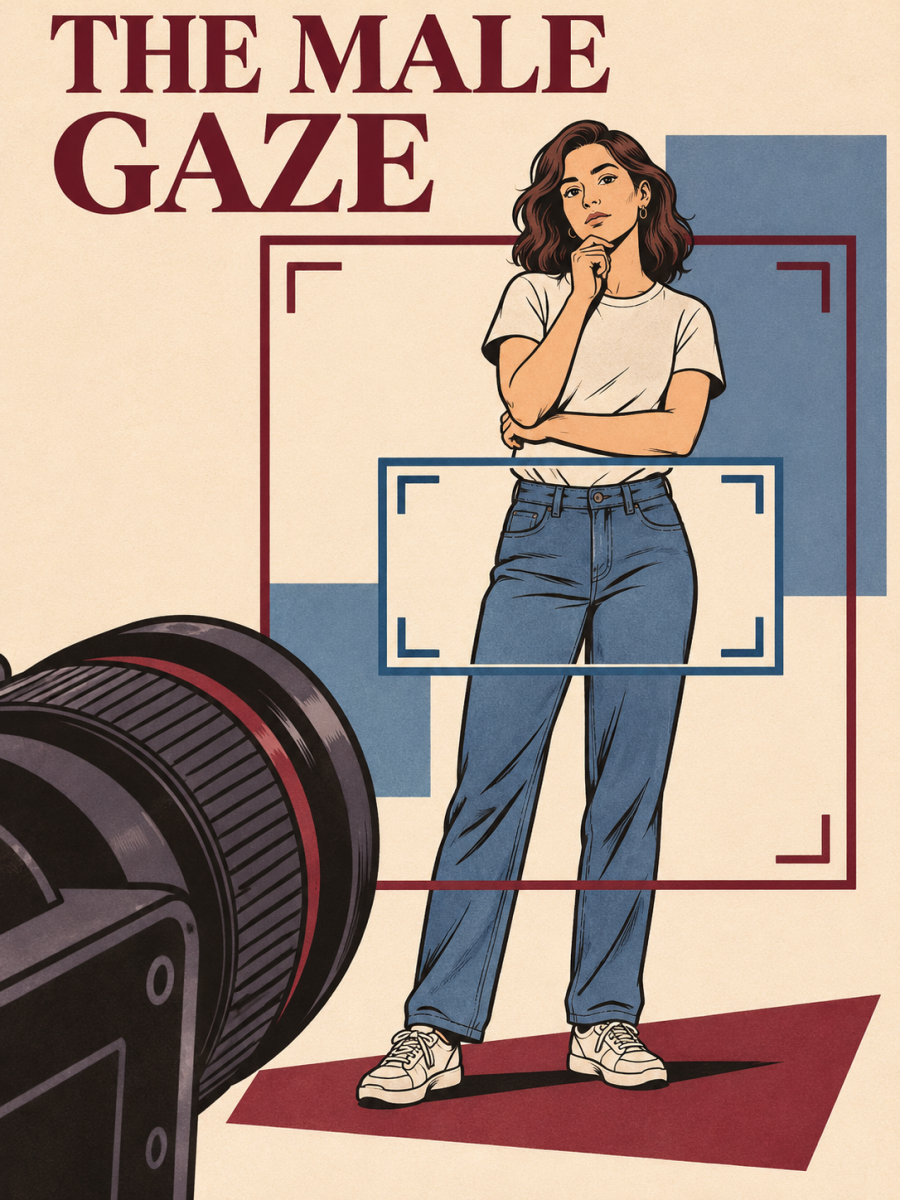
Have you seen this American Eagle jeans ad from 2025? The brand invited actress Sydney Sweeney to star in a women’s jeans ad. Still, the camera frames her body from top to bottom, highlighting her breasts, abdomen, and other curves, using close-ups and zooming-in shots to direct viewers’ attention to these areas. When I first saw the advertisement, I felt a vague sense of discomfort at the male-gaze perspective. Have you ever felt the same way when you’ve seen similar advertisements?
Laura Mulvey (1992) explains this male gaze as a perspective in which women are simultaneously watched and displayed, their appearance interpreted as having a powerful visual and erotic impact; this can be said to indicate their “being looked at.” This “being looked at” can be treated as a kind of object, as in the way this American Eagle jeans advertisement is presented, as if displaying an object. This does not rule out the possibility that the female star herself is involved, yet although the audience is clearly female, the camera language caters entirely to the male gaze. As Laura Mulvey (1997, p. 346) writes, “In a world ordered by sexual imbalance, pleasure in looking has been split between active/male and passive/female.” When the camera isolates Sweeney’s midriff in a close-up, it directs my attention to one part of her body. In that moment, I am invited to look at her body rather than pay attention to what she is doing. This is where I see Mulvey’s distinction between active looking and being looked at in the advertisement. Perhaps this is a long-established image shaped by the media, and it is evident in the camera language.
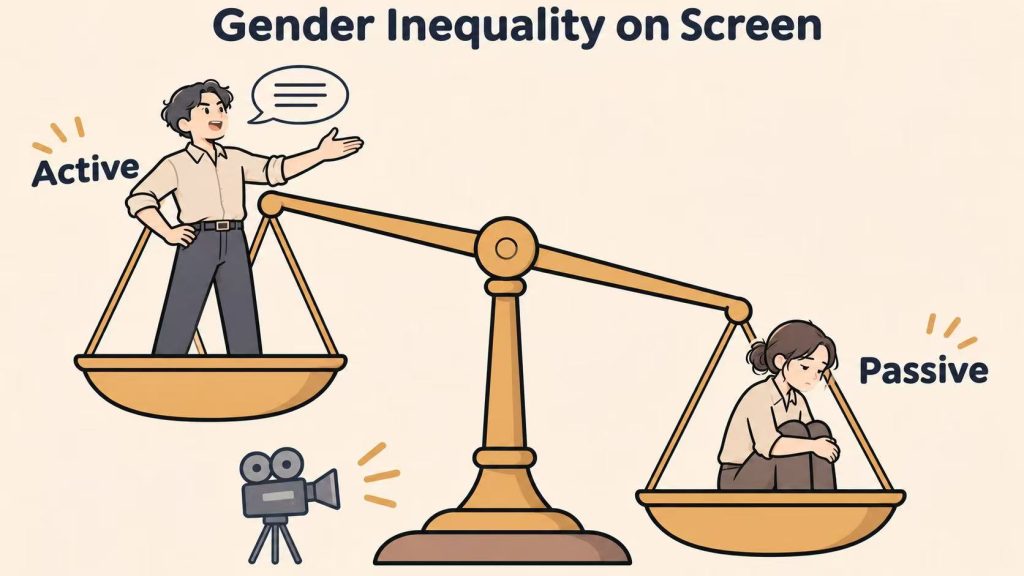
In her analysis of mainstream cinema, Laura Mulvey (2006, p. 346) writes that ‘pleasure in looking has been split between active/male and passive/female’. I noticed a similar dynamic in the American Eagle ad. When the camera isolates Sweeney’s midriff in a close-up, the tight framing draws my attention to the shape of her body and gives me little sense of how the jeans fit or how she moves in them. In that moment, the camera gives me the active role of looking and presents Sweeney’s body as something on display.
I hope to reduce this male-gaze perspective conveyed through camera language. For clothing and other items aimed at female audiences, the wearer should be the subject, emphasising that “people wear clothes” and preserving the details of authentic dressing. If I were filming a jeans ad, I’d show how the wearer moves in the jeans and how they fit when she walks or sits down. I’d use close-ups to show details such as the denim or stitching, and include wider shots so viewers can see how those details fit into the whole outfit.
Reference:
Mulvey, L. (2006) ‘Visual pleasure and narrative cinema’, in Durham, M.G. and Kellner, D.M. (eds.) Media and cultural studies: KeyWorks. Rev. edn. Malden, MA: Blackwell Publishing, pp. 342–352.


