
An insight on culture industry and its impact on fashion social media
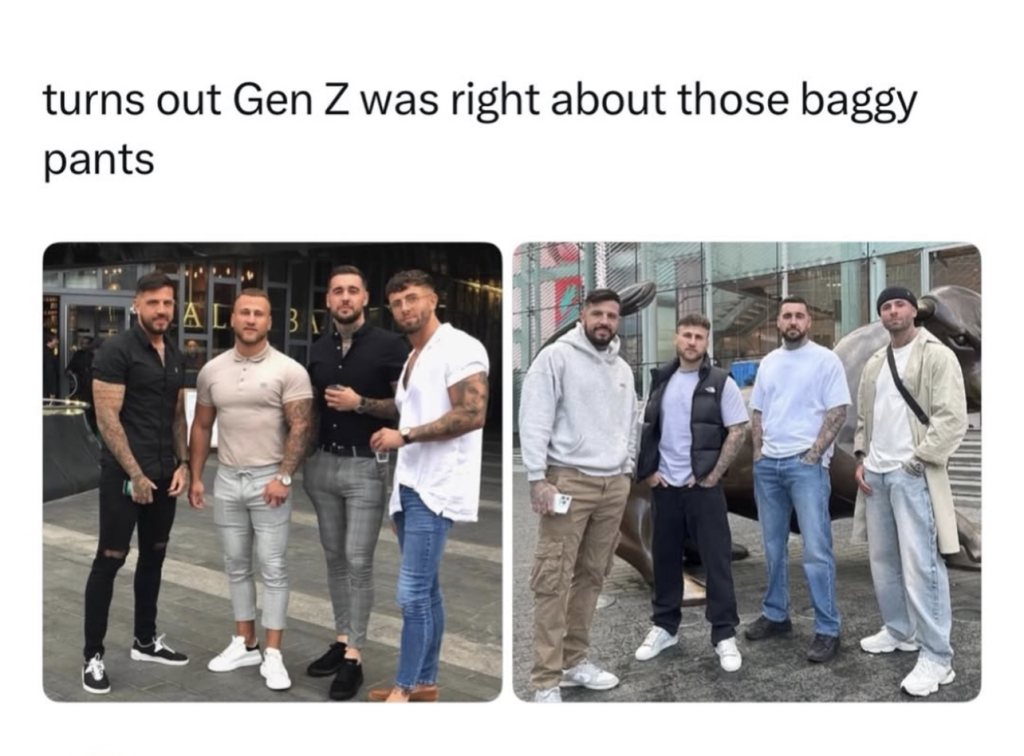
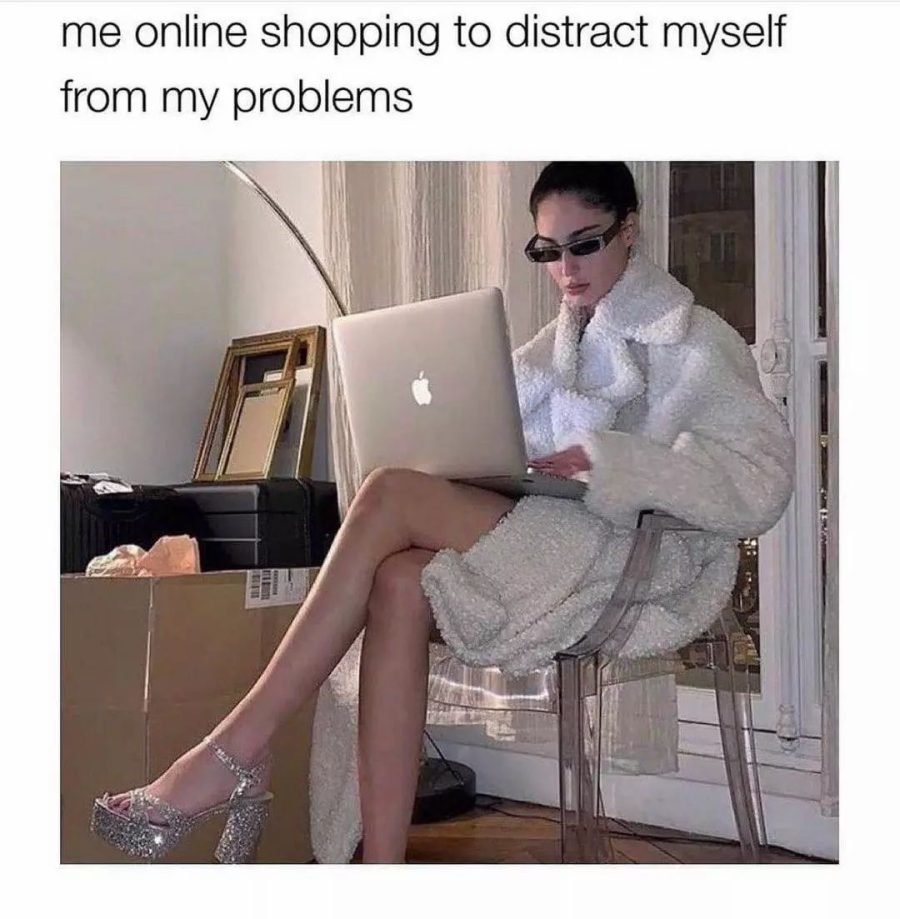
Westernised societies have a humorous way of influencing a guise that an individual’s thoughts are entirely their own and we all have full autonomy over our decisions. However, this blog seeks to examine the way individual style is increasingly scrutinised online and uniform fashion choices are marketed as the safest options for many. Let’s investigate this together.
What is Culture Industry?
Culture Industry, a term coined by philosophers Theodore Adorno and Max Horkheimer refers to the “commodification of art” in capitalist societies (Scanell,2007). This theory relays that culture, taste and desire are manufactured by people with positions of power in order to keep consumers distracted, malleable and in a loop of buying products to soothe the discontent of their own economic conditions.
If we apply 1940s Culture Industry to Gen Z culture, this exemplifies why it’s a common experience to go to an event and spot 2+ people in a similar outfit or take a trip to West London and notice an ungodly line outside of Blank Street for the latest Biscoff, Hot Honey Matcha. Society gets drip fed implications of what is desirable and consumers rush to be included in that narrative.
Surely – we aren’t that naive?
Many may argue that the Culture Industry theory is reductive of individuals who maintain a unique sense of self expression and find comfort in upholding their individuality. However, social media often discourages those who go against the grain, as users favour influencers who promote expected uniformity and ridicule creators who attempt to do otherwise.
Social media influencer Olusola frequently uploads her fashion tastes and takes on TikTok, sharing her distinctive style perspective and garment layering. Her tastes may be subjective but could be championed online as innovative and individualistic. However, she is constantly mocked and berated for her style choices, with some users believing that her audaciousness derives from delusions of grandeur.


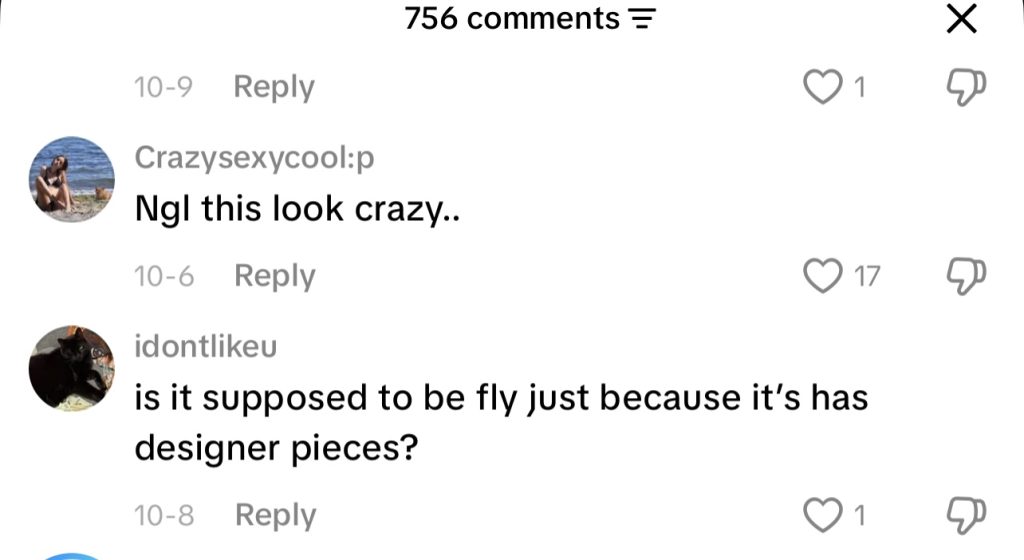
Designer Marc Jacobs stated, “clothing is a form of self-expression – there are hints about who you are in what you wear.” (GQ, 2014). Fashion has been historically accepted as an extension of oneself by its innovaters, meaning physical expressions of that identity should be accepted. Unfortunately, social media users display evidence of this not always being the case within modern day society.
This reveals the question – who is creating the taste and identity?
Influencers often reinforce certain social values and are known for receiving tons of PR from fast-fashion brands like Prettylittlething, OhPolly. These brands are notoriously recognised for scoping trends and hastily producing products to emulate them, often leading to the companies releasing similar items. As explained on New York Post, “Social media users can search in a comments section or follow a link in bio to find the exact same garments that their favorite influencer is wearing.”(Kato,2024). Influencers share their PR reviews with their following, ultimately resulting in fast fashion brands becoming the cultural tastemakers, manoeuvring what many of Gen Z believe is fashionable or in style. Additionally, the low price point of these companies creates accessibility, targets younger demographics and encourages frequent, high volume purchases.
Nobody is above Culture Industry Influence
I too have been swayed by trends, believing I’m manufacturing my own taste but realising very quickly that my decisions may be the work of carefully curated fashion marketing. It is increasingly difficult to find individuality in taste when social media permeates a mass of modern culture. Additionally, as stated by Manchester Metropolitan University, social media satisfies “demand for instant gratification”, which can keep users in an incessant state of relying on social validation (Hatley,2026). However, travelling and global culture immersion have equipped me with quirks that continually develop my own tastes. Fundamentally, I believe individuals can develop fashion individuality once they are aware of Culture Industry and are more critical of the choices they make.
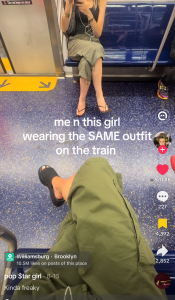
This TikTok video further explains how Culture Industry is affecting fashion in modern day society –
References –
Scannell, P. (2007) ‘Mass Culture’, in Media and Communication. London: SAGE Publications.
Bazner, D. (2014). Your morning shot: Marc Jacobs. [online] GQ. Available at: https://www.gq.com/story/morning-shot-marc-jacobs
Kato, B. (2024). Generation Z-ero style: Why young women all dress the same in jeans and a Black Top. [online] New York Post. Available at: https://nypost.com/2024/11/20/lifestyle/generation-z-ero-style-why-young-women-all-dress-the-same/
Hatley, N. (2026). The impact of fast fashion, consumer behaviour and fashion brand communication on sustainability. figshare. [online] doi:10.83056/mmu.32477994.v1.


