
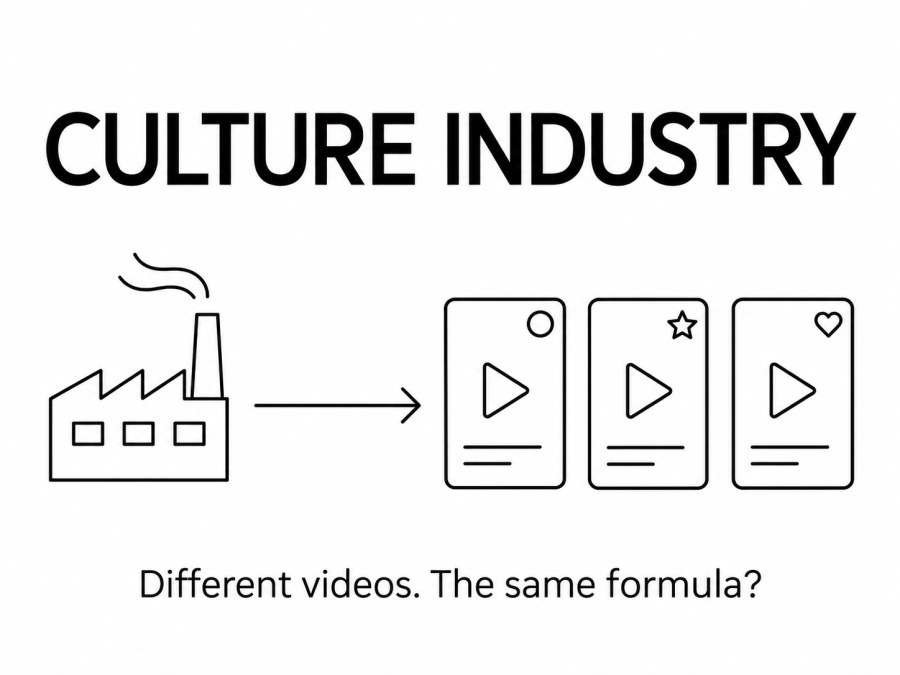
Has anyone noticed that when something, such as a joke, becomes popular, videos about it appear repeatedly on social media? Although they are filmed by different people, these videos sometimes look the same. People are following trends, but why?
Culture industry theory can help us understand this. It explains how commercial interests shape entertainment through repeated formulas (Horkheimer and Adorno, 2006, pp. 42–44). For example, in the chip challenge, two players each have nine chips. Each secretly selects three “poisoned” chips for the other person. They then try to avoid eating them. The first player to eat all three loses and must fulfil the other player’s request. The rules are easy to understand, so most videos do not explain them to the audience and instead begin with selecting the poisoned chips.
These videos entertain people, but, in my opinion, most creators film them not just for fun, but also to attract attention. Many videos feature this game and receive numerous likes. As shown in Figure 1, even the video with the fewest likes has about 15.3K. There are too many examples to show here. Their popularity is why I think people film these videos to attract attention.

This repeated format illustrates standardisation, which means using similar formulas or structures to create different cultural products (Horkheimer and Adorno, 2006).
However, some would argue that each video features different people, offers different prizes and unfolds differently. In one video, for example, two men hit each other when one of them picks a poisoned chip. These details make each video seem different and give it a sense of individuality. This reflects pseudoindividuality: standardised videos appear unique through small differences (Horkheimer and Adorno, 2006).
Culture industry theory helps us understand why people film similar videos and how they create differences between them. These small differences can give audiences new experiences and make the videos enjoyable. Although different people film the same game, this does not mean that they have no ideas of their own.
The next time we see a widely recreated challenge, we can consider what makes it popular, what stays the same and what makes each version different.
References
Horkheimer, M. and Adorno, T.W. (2006) ‘The culture industry: Enlightenment as mass deception’, in Durham, M.G. and Kellner, D.M. (eds.) Media and cultural studies: KeyWorks. Revised edn. Malden, MA: Blackwell, pp. 41–72.


Hello, your example of standardisation and pseudo-individuality through the crisp challenge was very clear. Different creators repeatedly use the same game rules while making their videos feel distinctive through different characters, interactions, and punishments. For example, you mentioned two men hitting each other after picking a “toxic” crisp. This clearly shows how the details can vary while the basic framework remains the same. It also made me think that recurring formats may gradually familiarise viewers with the rules, so they don’t have to figure out how the game works from scratch each time.
I also agree with your point at the end: different people filming the same game doesn’t mean they have no ideas of their own. Creators can still make choices, adapt the format, and express themselves, and the relationships and reactions between participants can also create different viewing experiences.
However, I think your judgement that creators are seeking attention could be explored further. The high number of likes in the screenshots shows these videos attracted attention, but is the number of likes alone enough to determine most creators’ motives? A video’s popularity could also be related to a creator’s existing audience, the interactions between the people in it, or a particularly amusing reaction. Entertainment, social interaction and the desire for attention may all influence the creative process; more evidence about the creators would make this explanation more convincing.
You have also given examples of how videos express individuality through small differences. I want to ask a further question: even when the rules of the game remain unchanged, could these interactions and reactions still amount to meaningful creativity? What criteria can we use to distinguish “pseudo-individuality” from creative expression within a standardised framework?
This is such an interesting post!!!!It makes me think of an experience I had with my sister. I noticed that you use the chip challenge as your core example to explain the culture industry and pseudo-individuality. My sister and I have actually played this game too! We adapted it by swapping the chips out for candy instead. Interestingly, this trend-style video got far more views compared to other videos I have made before. This personal experience makes your argument feel much more real to me.
I fully agree with your analysis: creators keep the same basic game structure, and only change small details such as participants, prizes and reactions. These tiny differences create the sense of individuality that Horkheimer and Adorno call pseudo-individuality. The core formula stays unchanged, even if each clip looks slightly different at first glance.
Your point that creators are not just blindly copying is really insightful. This makes me think about platform algorithms. Viral templates are prioritised by recommendation systems, pushing more people to follow the same successful format. The pressure for standardisation comes not just from the logic of the culture industry, but also from how social media platforms circulate content.
This balance is really thought-provoking. It feels like these trends are a double-edged sword. On one hand, the set format simplifies production and lets more ordinary people join in. On the other hand, the shared structure limits how far they can diverge creatively. I am curious about where we draw the line between harmless playful variation and the pseudo-individuality Adorno describes. When creators add small jokes or change little details within the trend, are they genuinely expressing themselves, or are these adjustments just part of the expected formula to keep audiences interested? Your post helps unpack this complicated dynamic really well.