
Have you ever watched a film and felt like you already knew how it would end? A looming sense of familiarity washing over you a, the characters might be different, but the story feels familiar. There is a problem, a dramatic setback, and eventually a victory! This familiarity offers a starting point for understanding the culture industry: a theory that questions what happens when culture is organised around making money.
Theodor Adorno and Max Horkheimer, (associated with the Frankfurt School) argued that entertainment under capitalism increasingly followed the logic of industrial production. Movies, radio programmes and magazines became commercial products created solely for mass consumption. Their concern was that profit and repetition could take priority over creativity and independent thought (Horkheimer and Adorno, 2002).
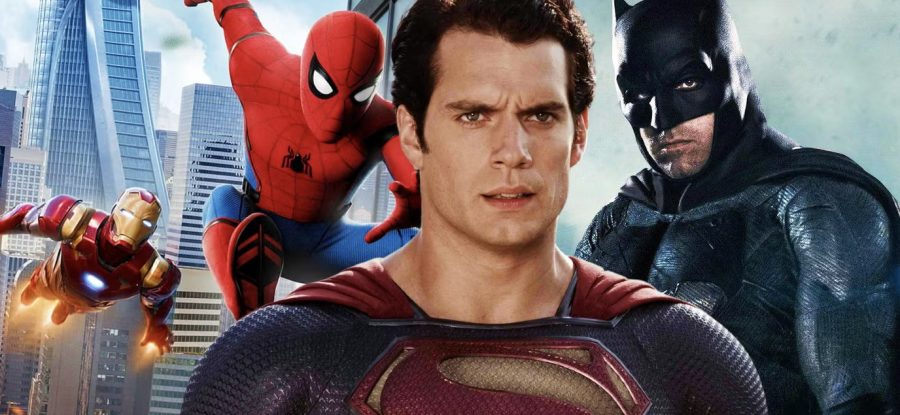
A central feature of this argument is standardisation. Cultural products may look different while following similar formulas. Let’s take a Marvel and DC movie. Two different main characters, two different superheroes, two different costumes, powers, and settings yet their journey often involves discovering their main ability, facing an enemy that opposes their ideaology and then saving the day. Both can be enjoyable, yet their differences might conceal how much of their structure remains the same.
From my perspective, it becomes interesting to think about sequels. If audiences reconginze a character, care about their story, another instalment can seem appealing before anyone’s watched it. For a studio deciding where to invest, that familiarity tends to become commercially attractive. An unfamiliar story, however, is scary to them. It doesn’t prove a sequel lacks creativity but can raise questions in regards to which ideas receive support.
However, Adorno and Horkheimer were concerned with more than predictable stories. They argued that entertainment could offer temporary relief while encouraging acceptance of existing social conditions. Someone exhausted by work might escape into a film, feel better and return to the same routine. From this perspective, leisure can help sustain the system that makes escape attractive in the first place.
I find this argument useful, although it risks underestimating audiences. Enjoying a superhero film does not mean accepting every message it contains. Viewers can question its politics, challenge its representation of different groups or disagree about its ending. Familiar stories can also inspire discussion and creativity. Commercial production does not determine what a cultural product means to the people encountering it.
Walter Benjamin offered a different perspective on mass media. He recognised that reproduction weakened an artwork’s unique presence, which he described through the concept of aura. However, he also explored how photography and cinema could expand access and create possibilities for collective, critical engagement (Benjamin, 1936). His perspective suggests that mass communication can support change as well as conformity.
For me, the culture industry encourages a thoughtful relationship with entertainment. Instead of only asking whether a film is enjoyable, we can ask who produced it, why it received funding and whose perspectives it makes visible. We can appreciate familiar characters while remaining curious about stories outside established formulas. The next time a film feels predictable, consider what that familiarity offers audiences and what it offers the company selling it. Those interests may overlap, but they are worth examining separately.
References
Benjamin, W. (1936) ‘The work of art in the age of mechanical reproduction’. Translated by H. Zohn. Available at: https://www.marxists.org/reference/subject/philosophy/works/ge/benjamin.htm (Accessed: 19 October 2026).
Horkheimer, M. and Adorno, T.W. (2002) ‘The culture industry: Enlightenment as mass deception’, in Dialectic of Enlightenment: Philosophical Fragments. Translated by E. Jephcott. Stanford, CA: Stanford University Press, pp. 94–136. Available at: https://doi.org/10.1515/9780804788090-007.


This is a very engaging blog post that has an easy to follow argument about films today commonly following familiar storylines but presenting them in slightly different ways. I found it very interesting to see this linked to the culture industry as it raises questions about if the film industry prioritises profit and engagement over originality. Sequels, remakes and comforting genres can be a less risky investment for production companies because audiences already know what to expect and studios can have a clear sense of what has been popular before. I also liked the point of how unfamiliar storylines can scare audiences because I think it leads to the question of whether people genuinely prefer these predictable films or whether they’ve simply become used to what is repeatedly produced. Personally I find Netflix particularly bad for this as they make their own films quicker, cheaper and even often using the exact same actors with their familiar faces. One area I think you could look deeper into is the role of audiences in this process. You talked about underestimating audiences, but I wonder whether audiences are necessarily afraid of originality or whether they are just victims of studios with a priority of getting most profit. Do audiences actually want to keep seeing the same content and do prefer familiarity or are they so used to it that they don’t want change either. Overall, I think you made a good argument at questioning how commercial pressures influence what we get to see.