
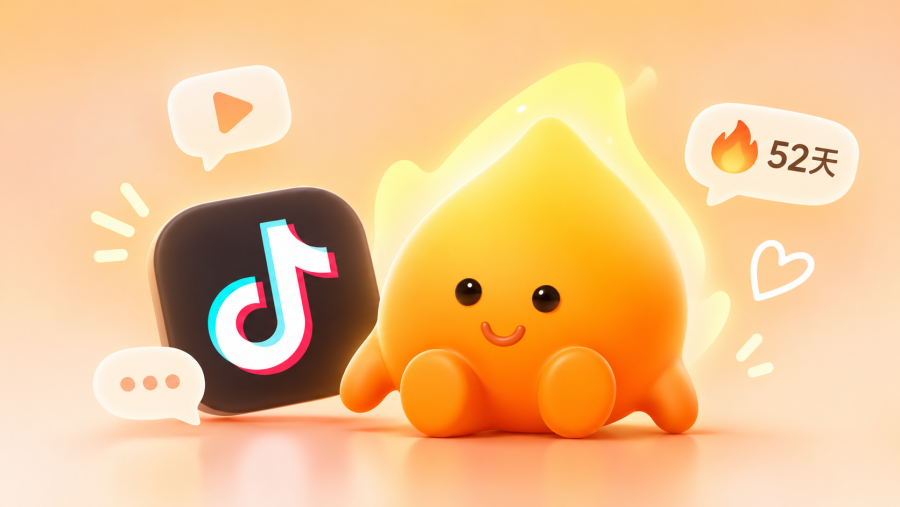
Douyin not just a popular video platform in China but also become a place where young people chat with their friends. It makes sharing videos with friends easier and provides another way for people to communicate. And for fun, Douyin added some gamified feature, like Flame badged. However, those features change why people communicate, do they care about their friends, or do they want a higher flame level?
McLuhan said that The Medium is the message, which means the form of a medium can shape how people communicate, rather than just the content they share (McLuhan, 2006). In my opinion, Douyin’s messages feature has changed people’s daily communication to some extent. Friends no longer needs to send text or voice message to share what they saw on the internet, instead sharing what fun video they view online. At the same time, Douyin added some gamified feature like the flame budges, that makes users keep sending video or message to maintain the flame.
In a study by Lin and Zaborowski (2025), a participant named Ruoxi explained that she initially did not know how to start a conversation with her boyfriend. However, sharing videos on Douyin helped them break the ice. Another participant, Juzi, she mentioned that, to increase her Flame level with a friend, they sometimes deliberately sent messages such as “good morning” and “good night”, in addition to sharing videos. Those examples can show how Douyin change people’s daily communication.
However, technology does not independently determine social behavior. Raymond Williams criticized technological determinism, arguing that social relationships and human needs also influence how technology is used (Laughrey, 2007, pp. 46–47). In the same study, Kun explain he reduces the interacting with his flame friends because he worried his girlfriend might misunderstand them (Lin and Zaborowski, 2025). Although Douyin encourages users to communicate by using gamified features, people still can decide whether to use or not to use it according to their own relationships and needs. Douyin may shape how people communicate but cannot completely decide why they communicate.
Overall, Douyin shows how technology can influence the way people maintain friendships. While Flame badges may encourage people to communicate more often, a higher Flame level does not necessarily mean a closer relationship. I think genuine care is more important than simply keeping a Flame alive.
Reference:
Laughey, D. (2007) Key Themes in Media Theory. Maidenhead: Open University Press.
Lin, H. and Zaborowski, R. (2025) ‘Flame badges and virtual pets: Gamified sociality on Douyin’, Social Media + Society, 11(3). Available at: https://doi.org/10.1177/20563051251358748.
McLuhan, M. (2006) ‘The medium is the message’, in Durham, M.G. and Kellner, D.M. (eds.) Media and Cultural Studies: KeyWorks. Revised edn. Malden, MA: Blackwell, pp. 107–116.


